










 With the temperature dropping, it's time to find someone to keep you warm. Find your hookups with our online dating guide!










A Tribe Called Quest,
Mos Def, Talib Kweli
Mos Def, Talib Kweli

Universal/Motown
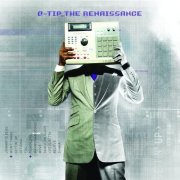
Q-Tip: The Renaissance
- Hip-Hop
- 2008
- Buy the CD
Reviewed by Jeff Giles
()
W
hen he split from A Tribe Called Quest in 1998, few people would have bet on Q-Tip going on to achieve greater success as a solo artist – but even fewer would have guessed that he’d only release one album, 1999’s Amplified, before disappearing into a nearly decade-long, Axl-like thicket of aborted sessions, unreleased albums, and ever-increasing expectations (not to mention disappointed fans). That’s just what happened to the rapper, though; after Clive Davis left Arista, he lost his main booster at the label, and when his planned follow-up to Amplified was shelved, his solo career started losing momentum that it never really recovered – to the point that some long-suffering fans may not believe The Renaissance is actually out until they hold it in their hands. Respected artist, nearly decade-long wait – The Renaissance can’t help but fall short of the hype, right? Well, actually, no: while it may not contain any paradigm-shifting classics, and perhaps not even Q-Tip would argue that it’s a masterpiece, the album is a rock-solid collection of smart lyrics, often brilliant production, deftly chosen guest spots, and Q-Tip’s typically matchless flow. This statement doesn’t mean as much as it might in a better year for the genre, but The Renaissance is a legitimate contender for rap album of 2008.
Typically, the longer an album is labored over, the more it sounds labored over, and after a nine-year wait, The Renaissance should, by all rights, have had all the fun sucked out of it – but there really isn’t a bad track among the dozen here. Q-Tip covers the spectrum with the album’s first two songs, starting off with the dark, jazzy “Johnny Is Dead” and then moving into the killer up-tempo dance cut “Won’t Trade.” The contrast represents the album nicely, as these songs find Q-Tip moving freely between songs about relationships (“You,” “ManWomanBoogie”), the world outside (“Move,” “Gettin’ Up”), and both at once (“We Fight/We Love”). Fittingly, the production is its own hybrid, blending live tracks with chopped-up samples (or, in the case of “We Fight/We Love,” what sounds like a rhythm loop lifted from an old Boz Scaggs record that’s right on the tip of this writer’s tongue. First one to name it for me gets a free copy of the album).
Q-Tip’s choice in collaborators is impeccable, too: Raphael Saadiq pops in for the Motown-flavored “We Fight/We Love,” “Getting Up” takes its basic DNA from a J Dilla beat, Floetry’s Amanda Diva sings a duet on “ManWomanBoogie,” and Norah Jones – yes, Norah Jones! – sings the hook on “Life Is Better.” (It’s got many other charms, obviously, but it’s worth purchasing the album just to hear Jones sing “Hip-hop is playin’ again / And it’s bangin’, too / And it’s bangin’ for you.”)
There aren’t any eye-popping moments, or any songs that make you think Q-Tip is pushing the limits of his talent, but that’s pretty much the worst thing that can be said about The Renaissance – it finds its star MC relaxed, at the top of his game, and sounding like the last nine years never happened. Which is pretty damn appealing, when you think about it.
You can follow us on Twitter and Facebook for content updates. Also, sign up for our email list for weekly updates and check us out on Google+ as well.