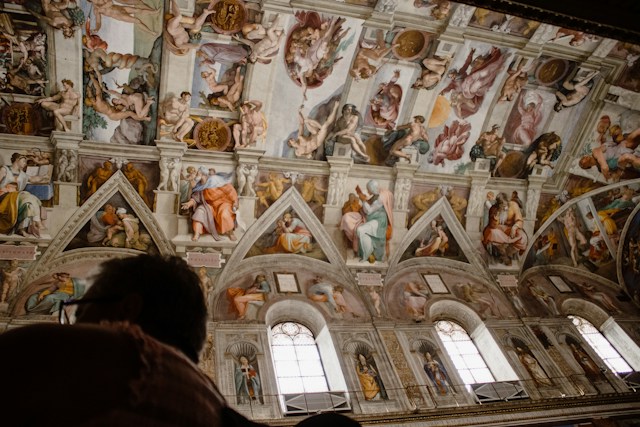
Every year, more than six million people pass beneath Michelangelo’s frescoed ceiling in the Sistine Chapel, making it one of the most visited single rooms on earth. The crowds, the heat, and the strict rules can turn a bucket-list moment into a stressful scramble if you don’t plan ahead. Here’s what actually matters when you’re getting ready to see this room in person.
Book Your Entry Time Before You Land in Rome
The Sistine Chapel sits inside the Vatican Museums, and general admission is sold as a timed entry ticket that regularly sells out days or even weeks in advance during peak season. Buying online ahead of your trip locks in a specific arrival window and skips the ticket-counter line outside the museum walls. If you wait until you’re standing in Rome, you may find the next available slot is two or three days away.
Arrive at Opening Time or Go Late
The Vatican Museums open at 9 a.m. most days and close ticket sales around 4 p.m., with last entry to the Sistine Chapel roughly an hour before closing. The first entry slot of the morning is consistently the quietest, since large tour groups tend to arrive between 10 a.m. and noon. If mornings don’t work with your schedule, the final two entry slots of the afternoon are the next best option, since day-trippers have usually cleared out by then.
Dress for the Rules, Not the Weather
The Sistine Chapel enforces a strict dress code because it remains a working chapel, not just a museum gallery. Shoulders and knees need to be covered for everyone, regardless of gender or age, and this applies even on a 95-degree August afternoon. Guards at the entrance turn people away for tank tops, short shorts, and low-cut necklines, so pack a lightweight scarf or shawl if you’re worried about layering in the heat.
Consider a Guided Visit for Context
Standing under the ceiling without any background on what you’re looking at means missing most of the story. A guide can point out which panels Michelangelo painted first versus last, why his technique visibly changes across the ceiling, and how the Last Judgment wall was added decades later under a different pope. Many travelers find that Sistine Chapel tours are worth the extra cost specifically because a skilled guide can translate the symbolism in the Creation of Adam or the Separation of Light from Darkness into something you’ll actually remember afterward, rather than just another photo you scroll past later.
Know That Photography Is Banned Inside
Unlike most of the Vatican Museums, where photos are generally allowed, the Sistine Chapel itself prohibits all photography and video, including phone cameras. This rule dates back to a 1980s restoration deal with a Japanese broadcaster that funded the cleaning of the frescoes in exchange for exclusive photography rights, and the Vatican has enforced a no-camera policy in the room ever since. Guards will ask you to put your phone away, and repeated violations can get you escorted out, so it’s worth just experiencing the room directly instead of trying to sneak a shot.
Stay Quiet and Keep Moving
The chapel is still an active place of worship where papal conclaves elect new popes, and staff enforce a silence rule that surprises many first-time visitors. Loudspeakers periodically remind the crowd to stop talking, and guards will shush anyone who forgets. Because space is limited and thousands of people cycle through daily, you’re also expected to keep moving toward the benches along the side walls rather than parking yourself in the center of the room for an extended stretch.
Plan Your Exit Route in Advance
Leaving the Sistine Chapel isn’t as simple as walking back the way you came. One exit leads directly to St. Peter’s Basilica, which is convenient if that’s your next stop, but it’s a one-way route with no re-entry to the museums. The other exit loops back toward the museum gift shops and the main Vatican Museums entrance, which makes more sense if you still have galleries left to see. Decide which direction fits your itinerary before you walk in, since backtracking isn’t an option once you’ve committed to a door.
Getting the most out of a visit to the Sistine Chapel comes down to timing and small logistics more than luck. Book your slot early, dress correctly before you leave your hotel, and pick a guide or exit strategy that matches how you actually want to spend the rest of your day at the Vatican. The ceiling will still take your breath away regardless, but showing up prepared means you’ll spend that time looking up instead of dealing with avoidable friction.