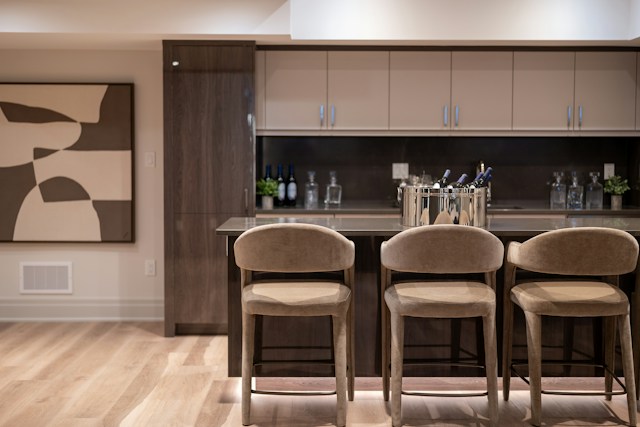
For decades, the home bar looked dated. It belonged in a wood-panelled basement or behind a mirrored cabinet stocked with bottles that were rarely opened. Then bar carts appeared in apartments, cocktail culture rediscovered old recipes and staying in became a social plan.
The home bar has returned in a relaxed form. It may be a fitted alcove, a cupboard or a trolley holding a shaker and several useful bottles. Its purpose is not to recreate a commercial venue but to make an ordinary evening feel like an occasion.
A Familiar Idea in a Smaller Space
Earlier home bars copied pubs with long counters, stools and shelves packed with glassware. That required a basement or spare room, linking the idea with suburban houses and generous floor plans.
The current version asks for less space. Designers are fitting bars into shallow recesses, former closets and the ends of kitchen cabinets. A small refrigerator can sit beneath a counter, while sliding doors conceal everything during the working day.
Several formats suit homes without a dedicated entertainment room:
- a wheeled cart beside the dining table;
- a fitted cabinet with a work surface and lighting;
- a kitchen cupboard adapted for bottles and glasses;
- a narrow console with storage underneath.
This reduced footprint has changed the bar’s purpose. It no longer needs to dominate a room or advertise a large collection. Its job is to organise a modest selection and provide a natural place for preparing drinks.
Nostalgia Without the Complicated Rules
Home bars inspire a similar affection for recognisable objects. A heavy tumbler, chrome shaker, cut-glass decanter or vintage ice bucket can carry more character than specialised equipment. Records and old drinks books add atmosphere without turning the room into a period set.
The strongest interiors borrow details rather than copying an entire decade. Walnut and brass may suggest a mid-century lounge, while coloured glass and warm lamps recall informal 1970s bars. Modern refrigeration and washable surfaces keep the styling practical.
Nostalgia also influences digital entertainment, particularly demand for old-style slot machines with familiar reels, clear symbols and rules understood after a brief look. The selection at Fastpay casino includes games built around recognisable formats rather than unfamiliar mechanics. Straightforward play does not remove substantial win potential, although every result remains random. Their appeal lies in clarity without a lengthy tutorial.
Drinks Need a Short Menu
Preparing a drink creates a ritual around which a gathering can form. It encourages conversation without requiring the host to disappear into the kitchen. Alcohol-free spirits, tonic water, cold-brew coffee and syrups also give the bar a purpose when alcohol plays a minor role.
A compact house selection might include:
- one stirred classic, such as an Old Fashioned;
- one longer drink with soda or tonic;
- one alcohol-free option using citrus and garnishes;
- beer, wine and chilled water for anyone preferring simplicity.
The International Bartenders Association’s cocktail collection records established recipes and measurements. A balanced classic generally serves a gathering better than an elaborate drink requiring obscure ingredients.
Less Equipment, More Character
A credible bar does not need dozens of bottles. Two base spirits, vermouth, bitters and a liqueur cover numerous recipes. Citrus, soda water, sugar and ice handle much of the remaining work. A shaker, strainer, jigger and bar spoon provide the essential tools.
Glassware benefits from similar restraint. Short tumblers, highball glasses and several stemmed glasses will handle most drinks. Mismatched vintage pieces often add more personality than a large matching set.
Storage matters more than quantity. Vermouth should be refrigerated after opening, tools need somewhere to dry and frequently used bottles should remain easy to reach. A bar requiring constant rearrangement soon becomes decorative furniture. Even a compact setup feels deliberate when every bottle, glass and tool has a permanent place.
Lighting completes the setting. A small lamp, dimmable wall light or concealed strip defines the area without flooding the room. Warm light suits wood and coloured glass, while comfortable seating and music selected for conversation make the space inviting.
The home bar has returned because it adjusts to the room instead of demanding a room of its own. Compact storage, familiar drinks and a welcoming atmosphere give an old idea fresh relevance.
