Roulette usually looks simple from across the room. A wheel spins, a ball drops, chips get pushed around a grid of numbers. Underneath that calm surface sits a tidy piece of probability math that decides, over the long run, how much every bet is worth. Learning which bets exist, what they pay, and why the wheel matters more than the chip layout is the difference between guessing and playing with eyes open.
This article walks through the full menu of bets, the payouts attached to each one, and the house edge that sits behind every spin. The same math applies when you sit at a casino table or play online roulette from your phone. However, most digital lobbies list European single-zero and American double-zero wheels side by side, so you should understand the difference before you place your first bet.
The Layout and What You Are Actually Betting On
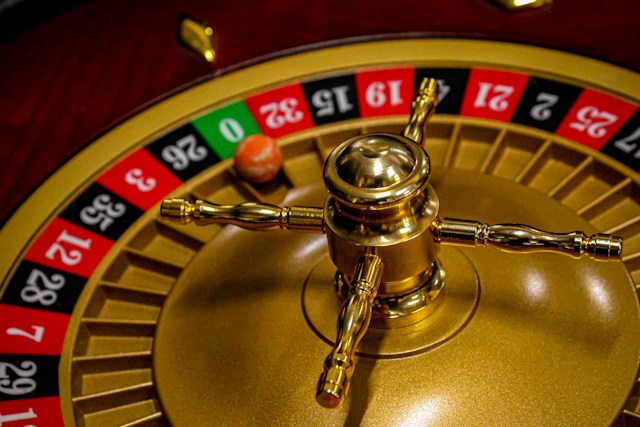
A standard European roulette wheel carries 37 pockets numbered 0 through 36. The American wheel adds a second green pocket, 00, for a total of 38. The felt looks the same on both versions and has three parts:
- The number grid. All 36 numbers sit in three columns and twelve rows.
- The zero area. The green pockets sit at the top of the grid. A European table has one green pocket, marked 0. An American table adds a second green pocket, marked 00.
- The outer border. Boxes around the grid hold the group bets: red and black, odd and even, 1 to 18 and 19 to 36, the three dozens and the three columns.
Every chip you place is really a bet on where the ball will stop. Chips inside the number grid are called inside bets, and they cover one to six numbers each.
Chips in the border boxes are outside bets, and they cover eighteen or twelve numbers at a time.
The payouts are set so that if the wheel had no green pocket at all, every bet would be a wash in the long run. The green pockets are what give the house its edge.
Inside Bets, Payouts and True Odds
Inside bets pay more because they are harder to hit. They are where the game gets dramatic and where bankrolls tend to swing fastest.
- Straight up. One chip on a single number pays 35 to 1. On a European wheel, the true odds are 36 to 1, so the house keeps the gap. On an American wheel, the true odds are 37 to 1, and the gap is wider.
- Split. A chip on the line between two neighboring numbers covers both and pays 17 to 1. It is a straight-up bet cut in half, with the same proportional edge.
- Street. A chip at the end of a row of three numbers covers the row and pays 11 to 1.
- Corner (square). A chip at the intersection of four numbers covers all four and pays 8 to 1.
- Line (six line). A chip at the junction of two rows covers six numbers at once and pays 5 to 1. It is the broadest inside bet and the one most forgiving to a modest bankroll.
- Five number bet (American wheel only). A chip covering 0, 00, 1, 2 and 3 pays 6 to 1. Its house edge of about 7.89 percent is the highest of any standard wager.
Live dealer roulette, where a real wheel spins in a studio and streams to your screen, follows the same layout and payouts. Studios run by developers such as Evolution stream both the European and American versions with the standard bet menu.
Outside Bets, Where Most Beginners Start
Outside bets cover large groups of numbers and pay smaller multiples. They hit more often and feel steadier, which is part of the reason classic casino games like roulette keep such a loyal crowd online.
Red or Black and Odd or Even
These are the even-money bets. Eighteen numbers win, nineteen or twenty lose depending on the wheel, and the payout is 1 to 1. The green pockets are the whole reason the bet is not a true coin flip.
Dozens and Columns
A dozen bet covers 1 to 12, 13 to 24 or 25 to 36. A column bet covers one of the three vertical columns of twelve numbers. Both pay 2 to 1. Twelve numbers win, the rest lose, and the green pockets again decide the long-run math.
House Edge by Wheel Type
The payouts above are the same on every standard wheel. What changes is the number of green pockets, and that one difference moves the house edge.
| Wheel | Green Pockets | House Edge on a Standard Bet |
|---|---|---|
| European single zero | 1 | About 2.70 percent |
| American double zero | 2 | About 5.26 percent |
| European with La Partage on even money bets | 1 | About 1.35 percent on those bets |
On a hypothetical $10 bet repeated many times, the expected cost to the player is about 27 cents per spin on a European wheel and about 53 cents per spin on an American wheel. Any single spin can go either way; the edge describes the average across thousands of them.
Special Rules That Lower the Edge
Two optional rules, when a table offers them, change the picture on even-money bets.
La Partage
La Partage returns half of a red/black, odd/even, or high/low bet when the ball lands on zero. It cuts the house edge on those bets roughly in half, from 2.70 percent to about 1.35 percent on a European wheel. On a $10 bet on red, a zero sends $5 back to the player instead of taking the whole stake. The rule turns up most often on French roulette tables.
En Prison
The second bet, En Prison, is a close cousin of La Partage: when the ball lands on zero, the bet is held in place for the next spin instead of being lost. If that spin wins, the player gets the original stake back with no profit, and if it loses, the stake goes to the house. Over time, the edge on those bets lands at the same 1.35 percent.
Both rules apply only to the even-money bets. Straight-ups, splits, and corners still pay their standard amounts and still face the standard edge. So when a table advertises La Partage or En Prison, the cheapest seats in the house are the outside even-money boxes.
Smart Habits for Your Next Spin
Nothing in roulette math points to a system that beats the wheel. Progressive staking plans like the Martingale shift the pattern of wins and losses, but leave the edge untouched. Starting from $10, a streak of seven straight losses already calls for a $1,280 bet, above the maximum at many tables.
What the math does support is a short list of practical habits:
- Pick the wheel with the smaller edge when both are available.
- Treat even-money bets with La Partage as the lowest-cost way to stay in the game.
- Decide a session budget before you sit down.
- Size your chips so the budget covers a reasonable number of spins.
- Stop at that number whether you are ahead or behind.
Roulette rewards patience and clear thinking more than any secret pattern. Know what each chip buys, know what the wheel costs you per spin, and the rest of the evening is yours to enjoy at your own pace.
