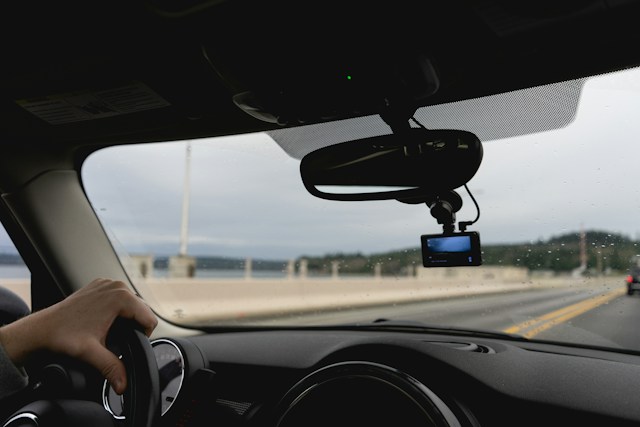
A deer steps out of the tree line. The driver ahead stands on the brake. The car behind doesn’t react in time, and two bumpers meet in a way nobody wanted. A decade ago, that crash would have been argued out between two drivers, one police officer, and an adjuster working from phone calls and photographs. Today there’s a fourth voice in the room: a small plastic camera stuck to the windshield that recorded the whole thing, deer included.
Dash cams have become some of the most consequential evidence in routine car-accident claims. They can rescue a driver who was blamed for something that wasn’t their fault, and they can sink a driver whose own footage shows them doing something they’d rather not explain.
The question is no longer whether the camera matters. It’s who the camera helps once the file comes off the SD card.
The Old Fight Was About Credibility
Before cameras sat on half the windshields in a parking lot, a rear-end or sideswipe case moved on three things: the police report, the physical damage, and whichever driver sounded more composed on the phone with the adjuster. Skid marks and crush patterns tell you a lot. They don’t tell you who flinched first, or whether a deer stepped out of the tree line a half-second before impact.
That ambiguity is where comparative fault lives. Many states reduce a plaintiff’s recovery by their share of blame, and a handful cut it off entirely once the plaintiff crosses a threshold. The exact rule varies by jurisdiction, so the first call a serious car accident attorney makes is usually to figure out which fault regime applies and how close the client is sitting to the line. A few percentage points of blame, assigned by an adjuster who wasn’t there, can move a settlement by tens of thousands of dollars.
The New Fight Is About the Footage
Dash cams are no longer a niche gadget. When the camera exists, both sides want it. When the camera exists and only one side has preserved it, the other side wants to know why.
That shift matters most in the ambiguous cases: a rear-end collision where the lead driver braked hard for an animal, a left-turn case where the oncoming car’s speed is disputed, or the lane-change sideswipe where each driver insists the other drifted. Those used to be settled on vibes. Now there’s often a video file that answers the question in six seconds.
Where the Camera Clearly Wins
Forward-facing footage is strongest in a narrow but common set of scenarios.
- Sudden-swerve animal cases. The video shows the deer, the elk, or the dog entering the roadway, which explains the hard brake or lane departure that a trailing driver blamed on erratic driving.
- Disputed signal and right-of-way crashes. At an intersection, the clip settles who had the green, who rolled the stop, and which car entered the box first.
- Staged or exaggerated collisions. When another driver brakes hard for no reason or claims an injury the impact can’t explain, the recording undercuts the story before it reaches a jury.
Where the Camera Hurts You Instead
The same file that proves the deer existed can also prove you were doing 54 in a 45 when it stepped out. Dash cams don’t take sides. They record your speed through GPS overlay, your following distance, your lane position, and, if the microphone is on, whatever you and your passenger were saying in the ten seconds before impact. If you were venting at the car ahead or admitting you were late, that audio is now part of the file.
Audio adds a second problem. Recording laws differ by state, and some jurisdictions require all parties to a conversation to consent. Attorneys who handle these cases regularly cover the admissibility rules for dash cam evidence (relevance, authenticity, an unedited original, a clean chain of custody), and the audio track is often where an otherwise helpful video runs into trouble.
Preserve the File Before You Argue About It
Most consumer dash cams loop. They overwrite the oldest footage once the SD card fills, which on a small card can mean a few hours. If you’ve been in a crash and the camera is still running when the tow truck arrives, the clip you need is being erased in the background while you trade insurance info.
When Each Side Wins
Footage wins when the physical story is contested and the video is clean, continuous, and timestamped. Old-fashioned reconstruction (scene photos, witness statements, vehicle damage) still wins when the camera angle missed the critical moment, when the clock drift is too large to trust, or when the audio captures something the driver would rather not explain.
The honest read is that dash cams haven’t replaced the old evidence. They’ve added a new layer that usually helps the careful driver and usually hurts the careless one, which is roughly how evidence is supposed to work. The deer, for its part, has no opinion. It steps out, and now the camera decides who gets blamed for it.
