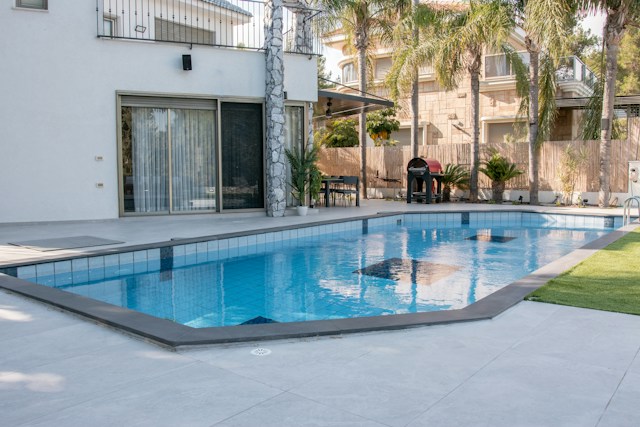
Most guys who want a pool picture the same thing: a hot Saturday, a cold drink, a few friends, a game on somewhere in the background. Then the planning starts, and almost all of the attention goes to the pool itself. Shape, size, depth, maybe a tanning ledge.
Here is the problem. The water is maybe half of what makes a pool area great. The other half is everything around it: where people sit, where the shade comes from, where the food happens, how it looks after dark. Get that part wrong and you end up with a nice pool that nobody hangs around after a quick swim.
If you are planning one, think about the whole backyard from the start. Here is how.
Start With How You Will Use It
Before anyone draws a shape, be honest about the next ten summers. A pool for laps, a pool for kids, and a pool for hosting a dozen people on a Sunday afternoon are three different projects.
| If the pool is mostly for… | Prioritize… |
|---|---|
| Hosting friends | Lots of deck space, seating out of the sun, a nearby bar or grill, good lighting |
| Kids and family | Shallow areas, a sun ledge, clear sight lines from the house and seating, a secure fence |
| Exercise and laps | A longer, simpler shape and less clutter around the edges |
| Relaxing after work | A spa or heater, lighting, privacy and a quiet corner to sit |
Most people end up somewhere in the middle. That is fine. The point is to know which way you lean so the money goes where you will feel it.
Give People Somewhere to Be
The single most common regret is not enough room around the pool. A narrow strip of concrete leaves guests standing awkwardly at the edge or retreating to the house. Plan for real zones instead:
- A lounging area with space for chairs that face the water and the sun.
- A shaded seating area for the people who do not want to swim, which on most summer days is a good chunk of your guests.
- A cooking and drinking area close enough to the pool to stay part of the action, but far enough that nobody is dripping on the grill.
- A clear path from the house to the pool that does not run through the middle of everything.
The surface matters too. Pavers, stamped concrete and composite decking all work around pools, and each feels different underfoot on a hot afternoon. Ask how hot a material gets in direct sun and how slippery it is when wet before you fall for how it looks in a photo.
Shade Is Not Optional
A pool in full sun looks great in a brochure and becomes miserable by mid-July. Plan shade on purpose: a pergola, a covered patio, shade sails or umbrellas set in permanent bases. Think about where the sun sits in the late afternoon, when most people are actually out there, rather than at noon.
Plan the Food and Drinks Early
If the grill is going to be part of the routine, decide where it goes before the pool is dug. That is when gas lines, electrical and water are easiest and cheapest to run. A simple built-in grill station with counter space, or a full outdoor kitchen with a fridge and sink, changes how often people stay outside after swimming.
Keep it out of the splash zone. Pool water and stainless steel do not get along, and a grill parked right at the edge of the water will rust faster than one set back a reasonable distance.
Do Not Forget the Night
Some of the best hours around a pool happen after the sun goes down. Good lighting makes that possible:
- Pool lights, so the water looks inviting and people can see where they are swimming.
- Path and step lighting, so nobody misses a step on the way back to the house.
- Softer ambient lighting around seating areas, so the space feels like a place to hang out, not a parking lot.
If a heater or spa is on the wish list, it extends the season on both ends. Cool spring evenings and early fall nights can be some of the nicest times to use a pool, if the water is warm enough.
Privacy and the Fence
Most places require some form of barrier around a residential pool, and the specifics vary by locality, so your builder should know exactly what applies before the design is finalized. Beyond the rules, a fence is also a big part of how the space feels. A well-designed privacy fence makes a backyard feel like a retreat instead of a stage for the neighbors.
Think About the Ground You Are Building On
Soil, drainage and the water table all affect what kind of pool makes sense and how the surrounding hardscape should be built. Coastal areas are a good example. In Virginia Beach, Chesapeake and Suffolk, sandy soil, low-lying lots and heavy summer storms all factor into how a pool and its surroundings get planned, from drainage around the deck to how the surrounding hardscape is set.
That is one reason it pays to work with a local pool builder who also handles decks, fences and hardscapes. When one team plans the pool and everything around it together, the drainage, the deck, the fence and the outdoor kitchen all fit, instead of being bolted on one at a time by different contractors.
A Quick Planning Checklist
| Decide | Before the design is final |
|---|---|
| Main use | Hosting, family, exercise or relaxing |
| Zones | Lounging, shade, cooking and a clear path to the house |
| Surfaces | Heat underfoot and slip resistance, not just looks |
| Shade | Where the late-afternoon sun will be |
| Utilities | Gas, electrical and water for a grill or kitchen, run before construction |
| Lighting | Pool, paths and seating areas |
| Extras | Heater, spa or automation, if you want them |
| Fence | Local barrier requirements and privacy |
| Site | Soil, drainage and how the surrounding hardscape will be built |
The Bottom Line
A pool is a big investment, and the best ones are not just the nicest water in the neighborhood. They are the backyards people do not want to leave. Plan the shade, the seating, the food and the lighting at the same time as the pool, and you will end up with the place everyone wants to be on a Saturday afternoon, including you.
