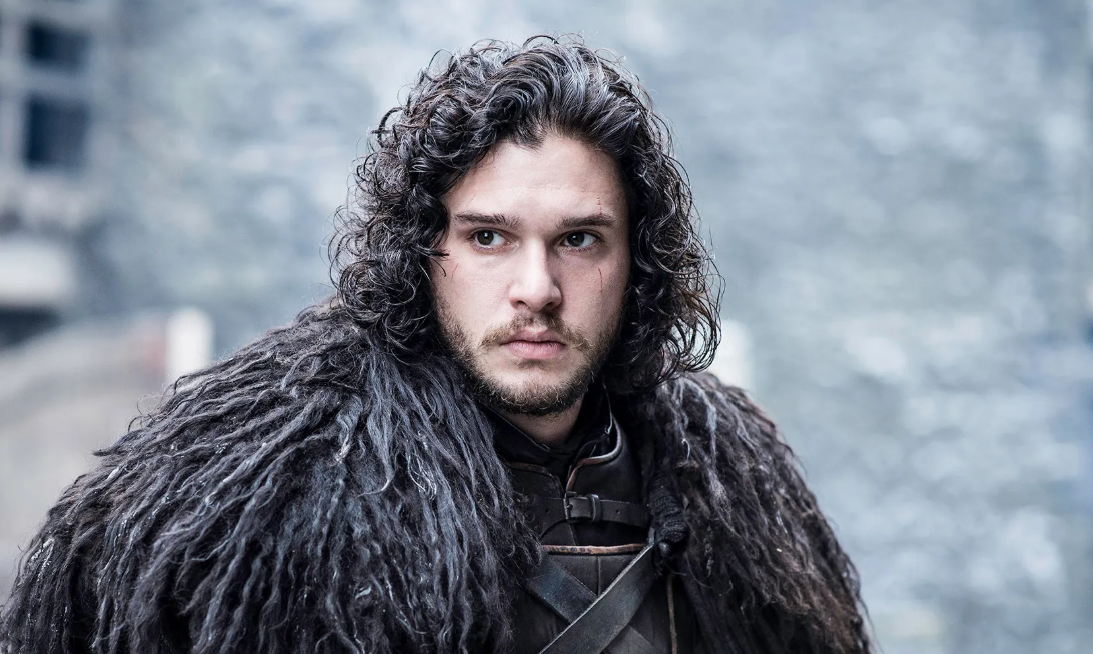
There’s a particular kind of actor who can convey volumes without saying much, and Kit Harington has built a career on exactly that quality. A brooding stillness on screen that reads as depth rather than blankness, and a face that somehow manages to look both ancient and completely contemporary. It’s a useful combination when you’re playing a man who has died and come back.
Born in London in 1986, Harington trained at the London Academy of Music and Dramatic Art before landing the role that would make him a household name. Cast as Jon Snow in “Game of Thrones” in 2011, he anchored one of television’s most ambitious productions for eight seasons, becoming one of the show’s most central figures despite spending much of the series in near-permanent conflict with his own sense of duty. When the final season aired in 2019, he was one of the most recognized actors on earth.
His work outside Westeros has been deliberate and increasingly interesting. He appeared in the Marvel Cinematic Universe as Dane Whitman in “Eternals,” a role with clear long-term franchise potential. He took on demanding stage work in London’s West End, including a well-received turn in “True West,” reminding anyone who needed reminding that there’s a trained theater actor underneath all that fur and chain mail. He has also spoken with notable openness about mental health and the disorientation that comes with leaving a role that consumed nearly a decade of his life. That candor has given him a public profile that feels more grounded and more interesting than the usual celebrity machinery tends to produce.
Harington has a natural ease in interviews that contrasts with the intensity of his on-screen work, and that gap between the character and the person has only made audiences more curious about him. He’s at a career stage where the pieces are starting to line up for something substantial outside the shadow of one defining role. Worth watching.
More recently, he returned to prestige television with a recurring role on “Industry,” the edgy and sexy HBO drama about the cutthroat world of high finance. He plays Henry Muck, the charismatic and self-assured founder of a green energy startup whose public confidence masks a more precarious reality beneath the surface. It’s a role that lets Harington lean into charm and entitlement in a way his earlier work rarely asked of him, playing a man whose privilege and ambition keep colliding with the ruthless machinery of the financial world around him. Stepping into a series with that kind of critical reputation was a smart move, letting him work in a contemporary, dialogue-driven register far removed from the swords and snow of Westeros. Harrington joined in Season 3, and then played an even larger role in Season 4 as his character’s intense and volatile relationship with Yasmin Hanani (Marisa Abela) drove the season’s main storyline.
Iconic Character – John Snow
Jon Snow was one of the most beloved GOT characters. Jon is the rare hero defined less by what he wants than by what he feels obligated to do. He is principled to a fault, quietly stubborn, and burdened by a seriousness that sets him apart from almost everyone around him. He leads not because he craves authority but because he can’t bring himself to walk away when others need him, and that reluctant decency is exactly why audiences connect with him. In a world full of schemers and opportunists, Jon is the one who keeps trying to do the right thing, even when it costs him dearly.
Jon Snow starts “Game of Thrones” at the bottom of the social order by his world’s standards. A bastard, forbidden by law and custom from inheriting anything, he chooses the Night’s Watch partly out of genuine idealism and partly because it’s one of the few places where his birth status doesn’t follow him. He arrives at the Wall as a boy who thinks honor is simple. The series spends eight seasons teaching him otherwise.
What makes Jon one of the show’s great characters is that his arc isn’t about gaining power. It’s about someone being pushed toward power repeatedly, reluctantly accepting it each time, and paying a price for it every single time. He leads the Night’s Watch. He unites the wildlings and the crows, two groups with generations of hatred between them, through sheer force of conviction. He is elected Lord Commander. He is murdered for it by his own men.
The resurrection is one of the show’s great dramatic moments, but what Harington does with the aftermath is more interesting than the spectacle of it. Jon doesn’t come back changed in the way the show seems to expect. He comes back quieter. Emptier. And he carries that weight forward, which makes every subsequent decision feel heavier and more earned.
The relationship with Daenerys (Emilia Clarke) is one of the series’ most compelling and most tragic threads. Two characters with legitimate claims to the same cause, genuinely drawn to each other, ultimately unable to reconcile what they each believe about justice and power. The final choice Jon is forced to make is one of the most morally serious moments in the show’s run. It aligns with his character, though it was part of an ending that left most fans feeling empty.
Running underneath everything is the identity thread that the show teases across multiple seasons and finally resolves: Jon Snow is not a bastard at all. He is Aegon Targaryen, the legitimate heir to the Iron Throne. It’s a reveal that should feel triumphant and instead feels like another burden. Which is entirely consistent with who Jon Snow has always been.
He is, at his core, the show’s moral compass. Not a perfect one, not an uncomplicated one, but the character the audience consistently turns to when they need to understand what the show believes about sacrifice, leadership, and the cost of doing the right thing. It’s a shame that the show’s ending wasn’t worthy of this and other characters.
Interviews and Quotes
The Tonight Show Starring Jimmy Fallon (2026)
“I’m naked about 90% of the time.” Kit Harington discusses his role on “Industry.”
Variety Interview
At one point, Harington stopped reading reviews about the show and her performances. “My memory is always ‘the boring Jon Snow.’ And that got to me after a while, because I was like, ‘I love him. He’s mine and I love playing him.’ Some of those words that were said about it stuck in my craw about him being less entertaining, less showy.”