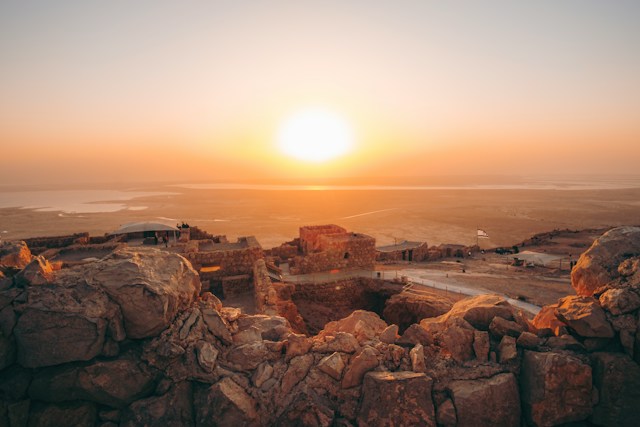
Planning a trip to Israel for a congregation involves more moving parts than a typical vacation. Between coordinating flights for forty or fifty people, arranging Sabbath-appropriate schedules, and finding guides who understand the biblical significance of each site, the details add up fast. This guide walks through what actually matters when organizing a trip like this, from the first planning meeting to the final day in Jerusalem.
Set a Clear Purpose for the Trip
Before booking anything, decide what the trip is meant to accomplish. Some groups want a walk-through of the Gospels, tracing the life of Jesus from Nazareth to Jerusalem. Others want a broader Old and New Testament experience that includes Masada, the Dead Sea, and the Galilee region.
This decision shapes everything else, including the itinerary, the length of the trip, and even which guide to hire. A pastor leading a study on the Exodus story will want different stops than a youth group focused on the Gospels. Write down the goal in a single sentence and refer back to it when planning gets complicated.
Choose the Right Time of Year
Israel has a Mediterranean climate, meaning hot, dry summers and mild, wetter winters. March through May and September through November tend to offer the most comfortable walking weather, with daytime temperatures in the 60s and 70s Fahrenheit.
Religious holidays also affect timing. Passover and Sukkot bring large crowds to Jerusalem, which can mean packed sites and higher hotel prices. Christmas week draws crowds to Bethlehem specifically. Many church groups prefer to travel in the shoulder seasons to avoid both extreme heat and holiday congestion.
Build a Realistic Budget
A typical 9 to 11 day trip runs anywhere from $3,000 to $5,500 per person, depending on flight costs, hotel category, and group size. Larger groups often get better per-person rates because tour operators can negotiate bulk pricing on buses, guides, and hotel blocks.
Build in a buffer for currency exchange, meals not included in the package, and gratuities for guides and drivers, which are customary and expected. Many churches offset costs through fundraising dinners, sponsorships, or a payment plan that lets participants pay in installments over several months. Setting the budget six to nine months in advance gives people time to save.
Work With a Tour Operator Who Knows Group Travel
Booking flights and hotels independently for a large group is possible, but it creates a lot of unnecessary risk. A single missed connection or overbooked hotel can throw off an entire itinerary for fifty people. Tour operators who specialize in faith-based travel already have relationships with licensed guides, vetted hotels, and drivers who know how to handle group logistics.
Operators that focus on church group trips to Israel also tend to understand things a general travel agency might miss, like scheduling communion services at the Garden Tomb or building in time for baptism at the Jordan River. Ask any operator for references from other churches and specifics about group size limits, since some sites restrict how many people can enter at once.
Map Out the Itinerary
A well-paced itinerary balances major sites with rest. Jerusalem alone deserves at least three full days, covering the Old City, the Mount of Olives, Yad Vashem, and the Western Wall. The Galilee region, including Capernaum, the Sea of Galilee, and Nazareth, typically takes two to three days.
Avoid the temptation to cram in everything. Groups that try to visit ten sites a day end up exhausted and unable to absorb the significance of any single place. Build in at least one slower day, whether that means a boat ride on the Sea of Galilee or free time to journal and reflect.
Prepare the Group Spiritually and Logistically
Send participants a packing list and a basic orientation packet at least two months before departure. Modest dress is expected at religious sites, and comfortable, broken-in walking shoes matter more than almost any other item packed.
Consider holding two or three pre-trip meetings to go over the itinerary, discuss the historical and biblical context of the sites, and answer logistical questions. Groups that arrive with some background knowledge tend to get more out of each stop, since guides can go deeper into context rather than starting from zero.
Handle Travel Documents and Safety Logistics
Every traveler needs a passport valid for at least six months beyond the return date. Check whether any group members need visas based on their nationality, since requirements vary outside the U.S. and most European countries.
Travel insurance that covers trip cancellation and medical emergencies is worth the cost for a trip this significant. Assign a point person, often the pastor or trip coordinator, to keep everyone’s documents and emergency contacts organized in one place.
Planning a church trip to Israel takes months of coordination, but the payoff is a shared experience that reframes how a congregation reads scripture for years afterward. Start with the purpose, build the budget around realistic numbers, and lean on an experienced operator to handle the logistics that would otherwise consume all the planning time. The goal is a trip that leaves room for reflection, not just sightseeing.