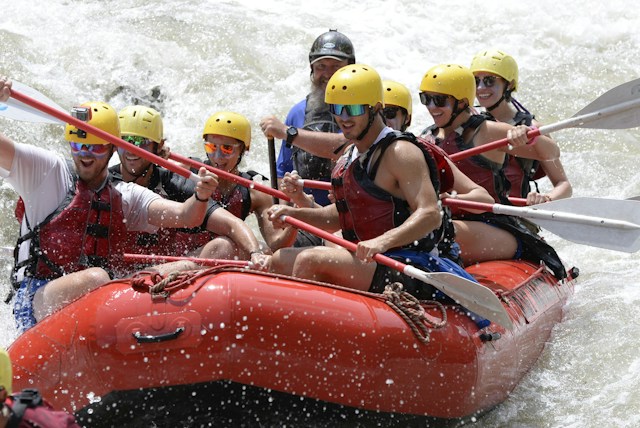
The Chattahoochee River cuts through downtown Columbus, Georgia, and for a 2.5-mile stretch, it drops through Class II to Class IV rapids that draw paddlers from across the Southeast. This isn’t a lazy float trip. Before booking a spot on a raft, it helps to know exactly what the river demands, what the outfitters provide, and how to prepare so the day goes smoothly instead of sideways.
The River Itself Is a Reclaimed Rapid
For most of the 20th century, two dams — the City Mills Dam and the North Highlands Dam — buried this section of the Chattahoochee under still, industrial water. When those dams came out between 2012 and 2013, the river underneath was exposed for the first time in over a century, revealing a natural rock-bottom rapid course. It’s now billed as the longest urban whitewater course in the world, running right through the heart of Columbus and neighboring Phenix City, Alabama.
That history matters because the rapids aren’t artificial or engineered like a whitewater park with concrete channels. The riverbed is real rock and real current, shaped by decades of erosion before the dams went in and by the river’s natural flow since they came out. Water levels and rapid intensity shift depending on dam releases upstream, so the exact character of a rapid can change from one trip to the next.
Know the Difference Between the Upper and Lower Sections
The course splits into two distinct runs. The upper section, closer to downtown, holds the bigger water — Class III and IV rapids with names like Cutbait and The Sandbar Hole that will soak everyone in the raft and demand real paddling coordination. The lower section calms down to Class II and III, making it a better entry point for first-timers, younger kids, or anyone who wants a taste of whitewater without the full intensity.
Most outfitters let you choose which section to run, or combine both for a longer day on the water. If it’s a first trip, starting with the lower section and working up is a reasonable way to gauge comfort level before committing to the rougher water upstream.
Timing Affects Everything
Water flow on this stretch depends on scheduled releases, and outfitters typically run trips on set days tied to those releases rather than every day of the week. Spring tends to bring higher, faster water thanks to seasonal rain, while summer and fall releases are more predictable and moderate. Checking the specific outfitter’s release schedule before planning a trip saves a wasted drive, since the river simply isn’t runnable outside those windows.
Weekday trips tend to be smaller and less crowded than weekend slots, which matters if a quieter, more personal guide experience is the goal. Weather also plays a role beyond just rain — cooler months mean colder water even on sunny days, so dressing for the water temperature rather than the air temperature is the smarter call.
What Outfitters Actually Provide
Licensed operators running this stretch supply the essentials: helmets, life jackets, and the raft itself, along with a trained guide who rides along and calls out paddle commands. Wetsuits or splash jackets are usually available to rent for colder-water trips, which is worth doing rather than gutting it out in regular clothes. Guides also run a safety briefing before launch covering swimming position, what to do if thrown from the raft, and how to read their commands over the noise of the rapids.
For anyone comparing options in the area, this stretch has become one of the more established spots for white water rafting in Georgia, largely because the guided trips are well-organized and the rapids are consistent enough to plan around. Booking directly through a certified outfitter, rather than a third-party reseller, tends to get more accurate information about current water conditions.
Physical Requirements Are Real, Not Just Fine Print
Most outfitters set a minimum age around 12 for the upper, harder section, and require participants to be reasonably strong swimmers. There’s often a maximum weight limit for the wetsuit rentals and sometimes for raft placement, so checking those specifics ahead of time avoids a surprise at check-in. Anyone with a heart condition, recent surgery, or serious mobility limitation should talk to the outfitter directly before booking, since falling out of the raft is a normal, expected part of running the upper rapids.
Footwear matters more than people expect. Closed-toe shoes that can get wet — old sneakers or water shoes — are standard; sandals and flip-flops usually aren’t allowed because of the rocky riverbed.
Pack Light and Secure
Cameras, phones, and anything not strapped down have a short lifespan on this river. Many outfitters offer waterproof cases or GoPro rentals, which are a better bet than risking a personal device. A dry bag left in the vehicle with a change of clothes and a towel makes the drive home considerably more comfortable.
Understanding the river’s split personality — calm lower rapids and aggressive upper ones — combined with checking the release schedule ahead of time is what separates a well-planned trip from a disappointing one. Match the section to the skill level in the group, dress for the water rather than the weather, and the rest of the day tends to take care of itself.