The straight-leg trouser is the garment that changed most in 2026. Slim cuts that dominated menswear for 15 years now look underweight, and the replacement is a straight line from hip to hem that breaks lightly at the shoe. For a man over 40 this is useful news, because the slim silhouette punished a body past 40 harder than any other trend of the last decade. The current direction asks for proportion and cloth quality, and both of those favor a man who can afford a tailor and has stopped buying what his 25-year-old self wore.
The 2026 Silhouette
Structured tailoring returned this year after several seasons of loose, exaggerated proportion. The double-breasted jacket came back, the three-piece suit came back with it, and the emphasis moved away from logos and toward cloth and finishing. A jacket cut with real shoulders does more for a 45-year-old frame than a soft unstructured one, which suits a younger body and looks shapeless on most others.
Two measurements decide how well the new silhouette works on an older man. Trouser length is the first, and the current break is light, meaning the hem touches the top of the shoe and stops there. Jacket length is the second. It crept shorter through the slim years and has come back down far enough to cover the seat, which matters because a jacket cut too short on a man over 40 exposes the exact part of the body the jacket was there to manage.
Relaxed cuts survived, with a condition attached. A well-cut relaxed suit looks unforced, and a badly cut one looks big. The margin between the two is seam placement, which is a tailoring problem and the reason most off-the-rack purchases fail.
Common Wardrobe Errors After 40
Two errors recur. The first is dressing for the year a man last felt confident, which produces a wardrobe frozen somewhere around 2008. The second is buying whatever the shop window shows, which produces a wardrobe assembled for a body 20 years younger.
Correcting either one means buying less and fitting better. A man past 40 needs a small number of items that fit, in fabrics that hold their shape, in colors that work with each other. Dark denim, neutral chinos, a tailored blazer, a white shirt and a light blue one, leather shoes and a plain watch will cover most evenings he is likely to have.
Setting and Expected Formality
Most men over 40 own one good outfit and wear it to everything. That works until the evenings start differing from each other. An introduction made by a mutual friend sets a lower bar than a long-planned dinner does, and a match made on a sugar daddy website sets a different one again, because the two people have already told each other something before they arrive.
Judging the setting first and dressing to it takes about 10 seconds and removes the most common failure of the evening.
Poor Fit and Its Price
Fit is the variable with the most evidence behind it. In one study, viewers looked at photographs of the same man for five seconds, once in a bespoke suit and once in an off-the-peg version of the same color and cut. The bespoke version was rated higher on almost every attribute, and the only place it failed to win was trustworthiness. Research on what people assume from a brief look keeps producing results in this range.
Five seconds is the relevant window. A date forms an impression before either person speaks, from across a room or at a restaurant door, and that impression is built from silhouette and condition. Shoulder line, sleeve length, trouser break, shoe polish. At that distance a stranger can see exactly how a garment fits and has no idea what it cost.
Color and Texture in 2026
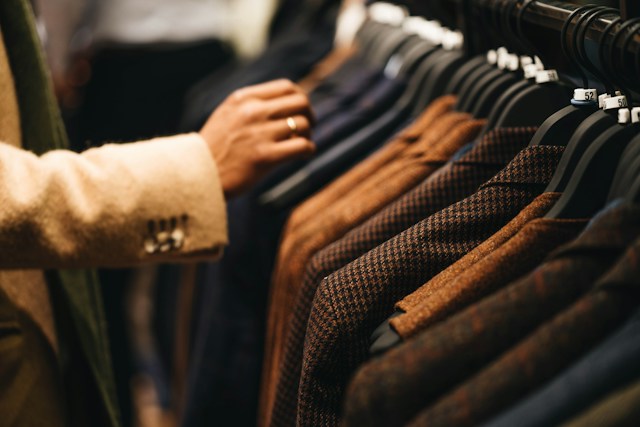
The palette this year is earthy. Chocolate brown and camel replaced the black and charcoal default, and jewel tones appeared for men willing to wear them. Brown works well on men over 40 in particular, because it is warmer than black against skin that has lost some contrast with age.
Texture matters more than color this year. Flannel, corduroy, brushed cotton and heavier knits give an outfit interest without requiring a bright color to supply it, and a man who is uncomfortable in strong color can get the same effect from cloth.
Color advice deserves skepticism. The research on red and attraction produced strong early results and much weaker later ones, including work suggesting the effect can run the other way. Building an outfit around a finding that has not held up is a poor bet. Wear the color when it looks right on him.
Accessories and Occasion Judgment
Accessories make more difference than clothing does at this age. A good watch, plain leather shoes in decent condition, and a jacket that fits over a shirt will do more than any single expensive purchase. Editors who assemble men’s wardrobe basics tend to name the same short list, which is a sign the list is correct.
Some items should leave the wardrobe outright. Square-toed shoes, boxy pleated trousers from a decade ago, shirts with contrast collars and any garment printed with a brand name across the chest all place a man in a specific past decade. Removing four dated pieces improves an outfit more reliably than adding two new ones.
Occasion judgment matters as much as the clothes themselves. Smart casual has no fixed definition and never had one, and what it means in a coastal town in July has little to do with what it means in a northern city in February. Asking where the evening is going, then dressing half a level above the assumption, solves the problem most of the time.
Clothing and the Wearer
Clothing also changes the man wearing it. Work on how clothes influence our performance found that subjects who changed into formal attire before a cognitive test showed more abstract thinking than subjects in casual clothes. Related work has tied attire to negotiating behavior and to measurable changes in hormone levels.
The caveat belongs with the finding. Most of this comes from small laboratory studies that have not been replicated outside a lab, so the size of the effect is unsettled. The direction is plausible enough to act on. A man who feels correctly dressed talks differently, and a date notices that long before she notices the jacket.
The Constant Underneath the Trends
Dressing well at this age means a small number of garments that fit, in colors that work together, kept in good condition, and chosen to match where the evening is going. That definition has not changed in 50 years and will not change in the next 10. The trends move around it. A man who has the definition can buy a straight-leg trouser this year and a different cut three years from now without either purchase mattering much, because fit and upkeep were the part that mattered all along.