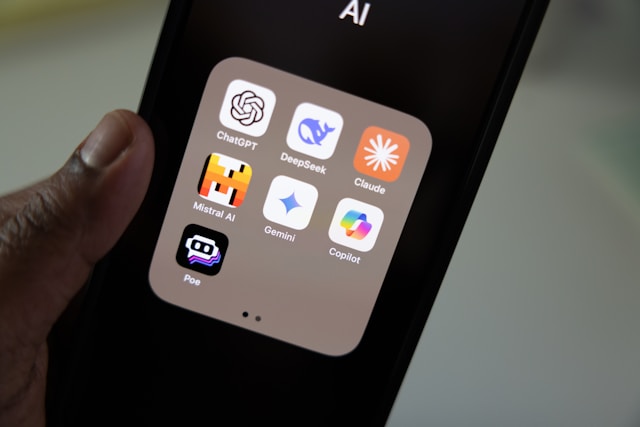
Most people ask the wrong question about AI. They ask: Which is better: ChatGPT or Claude?
For serious knowledge work, the better answer is often: use both. Or, use more than one. Right now ChatGPT and Claude seem to be dominating the AI race, but Gemini and Grok are options as well.
The reason to use two AI apps like ChatGPT and Claude is not because one model is always superior. The real advantage is that two models can make you think more carefully, raise the quality of your work, and help you keep pace as these tools keep changing. We get into these reasons below, and you can check out this video as well on using both ChatGPT and Claude.
1. Two answers force your brain to engage
One of the biggest risks with AI is not that it always gives you bad answers. It is that it often gives you answers that sound good enough. That can lead to real problems.
The response is polished. It’s also organized and sounds confident. Because our brains are wired to conserve effort, it becomes easy to accept what the model hands you.
That is a problem for students, professionals, and anyone doing serious knowledge work.
But something changes when you ask ChatGPT and Claude the same question. Now you have two responses in front of you. They may emphasize different facts. They may frame the problem differently. One may catch an issue the other missed. They may even reach different conclusions.
When faced with two responses, you can no longer stay passive. You have to compare:
- Which explanation is clearer?
- Which assumptions are stronger?
- Where do they disagree?
- Did one model overlook something important?
- Which answer actually makes more sense?
Comparison pulls your brain back into the process. You are no longer just receiving an answer. You are evaluating competing analyses. It forces you to engage!
That distinction matters. The goal should not be to let AI replace your thinking. It should be to use AI to stimulate, challenge, and improve it. Using two models is one of the simplest ways to do that.
2. A back-and-forth between models can dramatically improve the work
The second benefit goes beyond comparing two first drafts in order to engage your brain.
You can use ChatGPT and Claude in tandem, like two editors or analysts on the same project.
Start a draft in one model. Do the work you should already be doing: test it, challenge it, tighten it.
Then paste that updated draft into the other model. Ask it to find weaknesses, missing arguments, unsupported assumptions, or a more persuasive structure. Improve the draft with that feedback. Then take the new version—and the critique—back to the first model and stress-test it again.
Each model becomes a critic of the other. One generates. The other challenges. One expands. The other simplifies. One proposes a solution. The other looks for the cracks. This back and forth can be increibly powerful.
Imagine a lawyer using this with legal work. The lawyer might use one model to develop an argument or a first draft, then give that draft to the second model and ask it to respond like opposing counsel:
- What arguments would the other side make?
- What cases or facts need to be addressed?
- Where is the reasoning vulnerable?
Take that critique back to the first model and strengthen the product.
This applies to any area of knowledge work. When a subject-matter expert is guiding the process, the results can be excellent. The expert knows which suggestions are insightful, which are noise, and which are simply wrong. AI accelerates the analysis. The expert still supplies the final judgment.
If you are not an expert, the same loop still helps. You get a better working draft, discover questions you did not know to ask, and build a stronger grasp of the subject.
Two models, used this way, can raise the quality of the output far more than either model used alone.
3. Two models help you keep up with a field that will not sit still
These systems are constantly evolving. ChatGPT 6 was just released.
A model that looked clearly ahead a few months ago can be overtaken after the next update. ChatGPT may be stronger for one kind of research or brainstorming. Claude may be stronger for reviewing a long document or holding a particular writing style. Then a new version arrives, and the balance shifts again.
Trying to track which model is “state of the art” for every task can become a job of its own. Most people do not have the time or the interest to follow every benchmark, leaderboard, and launch post. If you regularly use two leading models, you do not have to pick a single winner. You test them against each other in real work.
Over time, patterns appear. You may prefer ChatGPT for brainstorming, research planning, or generating alternatives. You may prefer Claude for editing, document analysis, or long-form argument. Your preferences may be completely different. That is the point.
You do not need someone else’s universal ranking. You need to know which model performs best for your work. As the models change, your workflow can change with them, without requiring you to obsess over every announcement.
Better thinking, not more AI
The goal is not more AI. It is better thinking. Using ChatGPT and Claude together takes more effort. That extra effort is the benefit.
The next time the work actually matters, do not ask which model is better. Ask both the same question. Compare the answers. Let one criticize the other. Then use your own judgment to produce something neither model would have produced on its own. You’ll thank us!