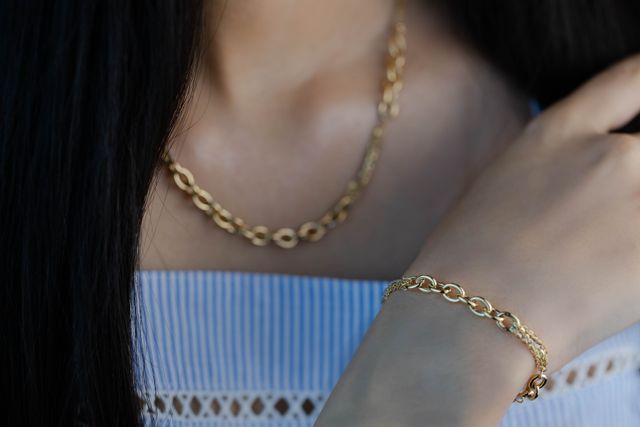
Permanent gold bracelets have become a steady favorite for people who want jewelry that stays on through sleep, showers, workdays, and exercise. The style feels simple, yet the decision raises sensible questions. Many clients ask how welding works, whether the flash can affect skin, and what kind of wear the chain can tolerate over time. Those points matter, because jewelry worn without interruption should be comfortable, hygienic, and dependable for daily life.
What Makes Them Permanent
A permanent bracelet has no clasp, which is the feature that sets it apart from standard wrist chains. After wrist sizing, many clients choose a permanent gold bracelet for its close fit, low profile, and easy wear during ordinary routines. The jeweler trims the chain, closes a tiny jump ring, and seals that point with a brief weld, creating one continuous loop that stays on until cut.
What Happens During Welding
The fitting starts with chain selection and wrist measurement. Enough room is left for movement, circulation, and mild swelling during heat or activity. A small guard rests beneath the closing point to shield the skin. Next, the jeweler aligns the final ring and uses a pulse welder to fuse the seam. The flash lasts a moment, and the entire closure usually takes seconds.
Is the Spark Safe
The visible spark can look stronger than it feels. In practice, the energy is directed at the jump ring rather than the wrist. A protective barrier separates skin from the contact area, which limits heat transfer. Most clients report no sensation, while some notice a quick click or faint warmth. Careful placement and proper fit also reduce later friction, pinching, or snagging.
Metals Matter Most
Metal choice has the biggest effect on lifespan. Solid gold resists oxidation, surface staining, and moisture exposure better than plated options. Gold-filled chains can hold up well, though repeated rubbing slowly wears the outer layer. Delicate links look refined, yet thinner forms usually tolerate less tension. For active wearers, sturdier construction often matters almost as much as purity.
How Long They Usually Last
A well-made bracelet may remain intact for years, though no chain is immune to force. Lifespan depends on alloy, link shape, thickness, wrist movement, and daily stress. Some people wear one for several seasons without trouble. Others need repair sooner because of lifting, repetitive contact, or occupational strain. “Permanent” describes the clasp-free format, not a guarantee of lifelong structural integrity.
Daily Stress Points
Most damage comes from pulling rather than water exposure. Common trouble spots include resistance bands, tote handles, coat cuffs, seatbelt edges, and playful grabbing by children or pets. Chlorine, saltwater, and household cleaners may dull surface luster over time, even if solid gold resists corrosion well. Repeated tension is the larger issue, because it can stretch rings, distort links, or weaken the welded seam.
Signs It Needs Attention
Bracelets often show mild warning signs before failure. Twisted links, flattened rings, rough edges, or a changed shape can signal accumulated strain. If fabric starts catching, the chain should be checked promptly. Early repair is usually straightforward and less expensive than replacing a lost section after breakage. Timely service also lowers skin irritation from sharp or misshapen metals.
Removal and Rewelding
Removal is simple and usually quick. The bracelet can be clipped at the welded ring for medical imaging, surgery, contact sports, or a change in preference. Many studios can reattach the chain later if the links remain in excellent condition. That makes the style more flexible than the word “permanent” suggests. The jewelry stays on by design, yet it is not medically or physically irreversible.
Choosing a Good Studio
Questions Worth Asking
A careful studio should explain metal type, repair terms, aftercare, and who performs the weld. Clients should ask whether the chain is solid gold, gold-filled, or plated, because those labels affect durability and value. It also helps to ask how the wrist is protected during closure and whether rewelding is offered after accidental breakage.
Fit Still Matters
Fit affects comfort as much as appearance. A chain worn too tightly may feel restrictive during heat, fluid shifts, or exercise. One hanging too low is more likely to catch on clothing or equipment. The best result leaves slight movement without obvious sagging. That balance helps limit pressure points, reduces snag risk, and supports long-term wear.
Conclusion
Permanent gold bracelets tend to last best when high-quality metal, sound welding, and realistic daily habits work together. The process is brief, controlled, and usually far less dramatic than first-time clients expect. Long-term performance depends more on chain design, fit, and repeated strain than on the tiny spark itself. For people who want jewelry with continuous wear, the style offers comfort, sentiment, and practical ease with minimal routine maintenance.