Cinema has a unique way of making us feel completely invincible. We watch an intense training montage and suddenly want to lace up boxing gloves, or we witness a brilliant culinary scene and immediately crave a home-cooked meal. We lean forward, hold our breath, and for a moment genuinely believe we could do that too.
But nothing captures human emotion quite like a breakthrough vocal performance. The exact moment a character drops their defences, steps up to a microphone, and releases a wave of pure acoustic power can give you chills from head to toe. It makes you realise that the human voice is the most dynamic, expressive instrument on earth. Unlike a piano or a guitar, you were born with it. You’ve just never been shown what it can actually do.
If you’ve ever been inspired by a powerful singing performance on screen, these five movie moments will make you want to find your own voice.
5 movie scenes that could spark your singing journey
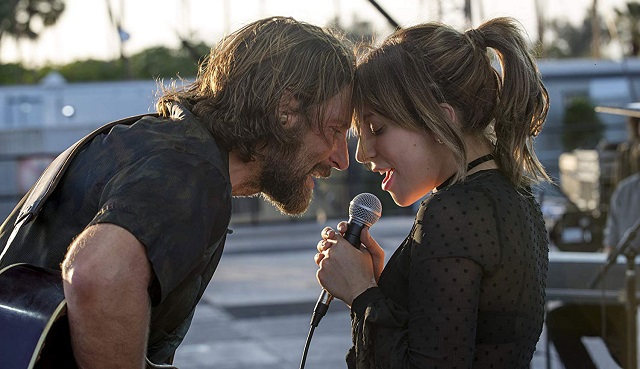
1 – The Stage Debut – A Star Is Born (2018)
The scene
Bradley Cooper’s character drags a hesitant Lady Gaga onto a massive stadium stage to perform her original song, “Shallow”.
The moment she grips the microphone, hides her face in her hands, and then builds to that iconic full-chested belt is pure electricity. It captures the transition from overwhelming vulnerability to unshakeable power. A great vocal coach specialises in helping you navigate that exact shift – teaching you how to anchor your nervous system with proper breath support so you can project your true identity without hesitation.
2 – The Breakthrough Solos – Sister Act 2: Back in the Habit (1993)
The scene
Shy teenager Ahmal is coaxed by his class to hit the high notes during a rehearsal of “Oh Happy Day”, followed by Lauryn Hill’s stunning performance of “Joyful, Joyful”.
Watching a hesitant student discover their own range in real time is incredibly inspiring. When Ahmal’s voice shifts from a quiet murmur to a soaring falsetto, the entire room is stunned. If you’re hoping to build that same confidence in your own voice, Wiingy connects learners with expert-vetted tutors for personalized 1-on-1 online lessons, helping them build confidence and develop their voice at their own pace.
3 – The Unscripted Catharsis – Almost Famous (2000)
The scene
A fractured, exhausted group of touring rock musicians sit in tense silence on a tour bus until Elton John’s “Tiny Dancer” comes on the radio, prompting a spontaneous collective sing-along.
This moment perfectly captures how music acts as the ultimate psychological reset. It isn’t about technical perfection – it’s about communal healing. Singing releases an immediate cocktail of dopamine and oxytocin, melting away anxiety and grounding your emotions. Learning to use your voice gives you a reliable, lifelong mechanism to channel stress and rediscover joy whenever life gets overwhelming.
4 – The Audition of Hope – La La Land (2016)
The scene
Emma Stone’s character steps into a quiet casting room and delivers a sweeping, narrative-driven performance of “Audition (The Fools Who Dream)”.
The song starts as a quiet, spoken-word story before expanding into a swelling anthem dedicated to creative passion. It proves that singing is the highest form of storytelling. Structured training teaches you that vocal performance isn’t just about hitting notes on a page – it’s about using tone, resonance, and volume to convey genuine vulnerability and unshakeable hope.
5 – The Operatic Defiance – The Shawshank Redemption (1994)
The scene
Tim Robbins’ character locks himself inside the warden’s office, hooks up the prison speakers, and broadcasts a duet from Mozart’s “The Marriage of Figaro” across the entire yard.
As the soaring opera notes echo over the concrete walls, every inmate stops dead in their tracks. Morgan Freeman’s narration notes that for a brief moment, the walls seemed to vanish and every man felt completely free. It’s a reminder that mastering your vocal resonance gives you the ability to project an emotional weight that cuts through any physical or mental exhaustion.
Why these moments hit so hard
There’s a reason vocal breakthrough scenes land differently to any other kind of movie moment. Psychologists call it “somatic empathy” – when we watch someone else use their body to express something overwhelming, our nervous systems respond as if we’re doing it ourselves. Our breathing changes. Our chest tightens. We feel the release alongside them.
But there’s something else going on too. Most of us have a complicated relationship with our own voice. We hear it on a recording and wince. We stay silent in karaoke booths. We mouth the words at concerts rather than sing them out loud. So when we see a character finally let theirs out – fully, fearlessly – we’re not just watching a performance. We’re watching something we’ve quietly wanted for ourselves.
That’s the real reason these scenes are so galvanising. They don’t make you want to be a star. They make you want to stop holding back.
Technical prep meets emotional delivery
The magic you see on screen isn’t natural-born luck – it’s the result of understanding how to control your biology. As Quincy Jones put it:
“You have to make the microphone your friend. It’s an ear that is right next to your heart, and it hears everything you feel and everything you don’t.”
The main reason most people hesitate to try vocal training has nothing to do with biological capability – it’s driven entirely by an internal critic. We look at silver-screen icons and assume that kind of presence is an elite genetic gift.
In truth, vocal presence is a muscle that can be consciously trained. Private lessons give you a space to safely navigate early mistakes, loosen jaw tension, and build real technique without the fear of an audience. When you learn to command your breath and confidently navigate your range, that same clarity starts showing up everywhere else too.
Take a deep breath, stop watching from the sidelines, and start finding out what your voice is actually capable of.