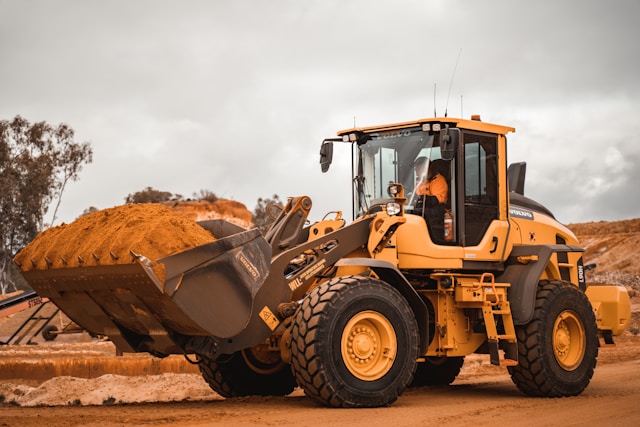
Backhoes might be the most versatile and frequently used piece of heavy equipment on the average construction site. They dig trenches, move materials, break pavement – you name it, they do it. They’re also involved in a pretty large number of serious construction site injuries and fatalities every year.
The size and power that make backhoes useful are the same things that make them dangerous. A machine that weighs 15,000 pounds or more and operates in close proximity to other workers and underground utilities creates a risky environment no matter what you do.
However, there are several ways you can keep yourself and others out of harm’s way.
1. Struck-By Accidents
This is the most common backhoe-related injury on construction sites, and it happens in a few different ways. Most frequently:
- Workers get struck by the boom or bucket as it swings during operation.
- Workers get hit by materials being moved or dumped.
- Workers walk into the machine’s operating radius without the operator seeing them.
The swing radius of a backhoe is the danger zone that people underestimate most often. The rear of the machine rotates in a wide arc during digging operations, and anyone standing within that arc is in the path of several tons of moving steel. The operator’s visibility during rotation is limited, especially on older machines without cameras or proximity sensors.
The pattern is almost always the same:
- A worker approaches the machine to communicate with the operator or grab a tool.
- The operator doesn’t see them.
- The boom or the counterweight swings and makes contact.
Always stay outside the swing radius unless the operator has acknowledged your presence and stopped the machine. This is the most basic rule of working near a backhoe. It’s also the one that gets violated most often.
2. Trench Collapses
Backhoes are often used to dig trenches. Workers then enter those trenches to lay pipe, set forms, inspect utilities, and perform other tasks. When a trench wall collapses, the weight of the soil can bury workers in seconds. (A single cubic yard of soil weighs roughly 3,000 pounds.)
The backhoe itself doesn’t usually cause the collapse directly, but the excavation it creates can. Trenches dug without proper shoring, sloping, or trench box protection are the setup for these accidents. The risk increases in wet conditions, loose or sandy soil, and situations where the trench is deeper than the soil type can support.
OSHA requires protective systems for trenches five feet deep or more. In practice, workers enter unprotected trenches on construction sites every day because the trench “will only take a minute” or because the protective equipment isn’t on site yet. Unfortunately, that shortcut has killed many construction workers over the years.
3. Rollovers and Tip-Overs
Backhoes have a high center of gravity, especially when the boom is extended and loaded. Operating on slopes, uneven terrain, or soft ground creates conditions where the machine can tip over. Swinging a loaded bucket to the side shifts the center of gravity laterally, and if the machine is already on an incline or near an edge, that shift can be enough to roll it.
Rollovers also happen during transport. Driving a backhoe along a road shoulder or near the edge of an excavation puts the machine in situations where the ground can give way or become unstable.
These accidents are often fatal for the operator if the cab isn’t equipped with rollover protection or if the operator isn’t wearing a seatbelt. Modern backhoes come with ROPS (rollover protective structures) as standard equipment. However, older machines sometimes don’t have them, or they’ve been modified in ways that compromise the protection.
4. Caught-Between Accidents
These accidents happen when a worker gets caught between the backhoe and another object. (A wall, a truck, a concrete barrier, another piece of equipment, or even the trench wall itself.) The backhoe doesn’t need to be moving fast for these accidents to cause catastrophic injuries. The machine’s weight and hydraulic force mean that even slow movement generates enough crushing pressure to cause fatal injuries.
Caught-between accidents frequently involve spotters or ground workers who are guiding the operator during repositioning or backing. The operator is focused in one direction, while the worker is positioned in another. Communication breaks down for a moment, and the machine moves in a direction the worker didn’t expect.
5. Contact With Underground Utilities
Every state has a 811 “call before you dig” system that sends utility locators to mark underground lines before excavation begins. The process is free and legally required. Despite that, utility strikes continue to happen because contractors skip the call, start digging before the locators have marked the area, or dig outside the marked zone without requesting an updated location.
Adding it All Up
Construction sites with backhoe operations will always carry inherent risk. The machine is too powerful for it to be otherwise. But the accidents described here follow predictable patterns, and predictable patterns mean preventable outcomes.
By taking the proper precautions, you can significantly lower your risk and be safer on the construction site.