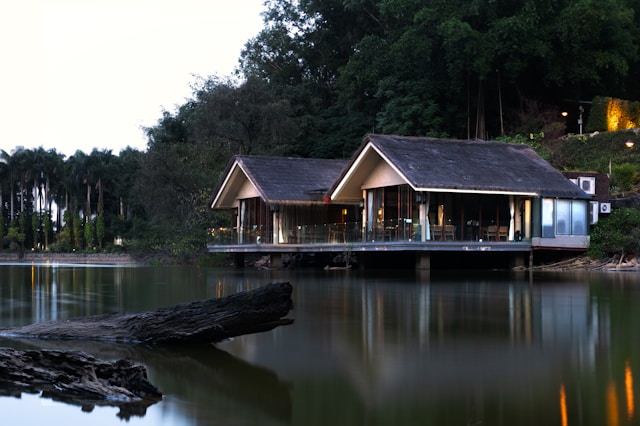
You spent good money on that cottage. You drive up there every chance you get. And yet, if you are being honest, the windows are still the same ones that were there when you bought the place.
That is a problem, and not just for the reasons you might think.
Most guys renovating a cottage focus on the obvious stuff first. The deck. The kitchen. Maybe a better dock situation. Windows get pushed to the back of the list because they seem like a utility decision rather than a lifestyle one. But here is the reality: at a lakeside property, the windows are arguably the single most impactful design choice you can make. They determine how much of that view you actually get to enjoy. They control how the morning light moves through the cottage. They decide whether the place feels like a real retreat or just an upgraded box with a nice backdrop.
Get them right and every other upgrade you have made looks better. Get them wrong and you are looking at flat, obstructed sightlines in a place that exists entirely for the view.
So let’s talk about what actually works.
Why Lakeside Windows Are a Different Conversation Entirely
Standard residential window design is built around a set of assumptions that do not apply at the lake. The orientation changes. The light is different, bouncing off water instead of reflecting off pavement or lawn. The environment is more demanding, with humidity, temperature swings, and exposure to wind and moisture that suburban windows simply are not engineered for over the long term.
On top of all that, the whole point of a lakeside cottage is the lake. You are there for the view, the light, and the connection to the water. Every design decision should be in service of that, and windows are where that design philosophy either delivers or falls flat.
The best cottage window designs for lakeside homes share a few things in common. They maximize the glass-to-wall ratio. They use configurations that frame the view intentionally rather than just punching a hole in the wall. They are built to handle lakeside conditions without degrading over time. And they work with the cottage’s architectural character rather than fighting against it.
Here is what that looks like in practice across the key areas of the property.
The Living Room: Go Big or Go Home
This is non-negotiable. The main living area of a lakeside cottage should have the largest, least obstructed water-facing windows you can reasonably install given the structure. Floor-to-ceiling configurations are ideal. Picture windows with minimal framing give you maximum uninterrupted glass and the cleanest view.
The mistake most people make here is defaulting to multiple smaller windows because that is what fits the existing rough openings. Do not do that. The rough openings can be modified. What you cannot easily get back once the renovation is done is the visual connection to the water that a properly sized, properly positioned large window delivers.
If you want to add some architectural character to the living space, casement windows flanking a large fixed centre pane is a classic combination that gives you ventilation options without breaking up the view. The casements open outward, which means on a summer evening with a breeze coming off the water, you can get genuine cross-ventilation without screens cutting into your sightlines.
The Master Bedroom: Wake Up to the Right View
Most cottage master bedrooms undersell the water view, and it is almost always a window placement issue rather than a room orientation issue. The bed faces one wall, the windows are on another, and you end up waking up staring at a ceiling instead of a lake.
Think carefully about where the bed sits relative to the primary window before you specify size and placement. A well-positioned large window or a set of double-hung windows low enough to see the water from a reclining position makes waking up at the cottage a genuinely different experience from waking up at home.
Transoms, smaller horizontal windows mounted above standard windows, are another move worth considering in the bedroom. They bring in additional light and sky view without compromising wall space for furniture.
The Kitchen and Dining Area: Function Meets the View
Lake cottages that get used hard need kitchens that work hard. But there is no reason the kitchen cannot also make the most of its position.
Casement windows above the sink are the practical standard in cottage kitchens for good reason. They are easy to open with one hand, they provide excellent ventilation when you are cooking, and a wide single casement or paired casements give you a solid view while doing dishes that makes the whole experience considerably more pleasant.
For dining areas positioned on the lake side of the cottage, consider a picture window or a wide slider that connects the eating space directly to the view. If the dining area opens onto a deck, a wide sliding or folding window-door combination blurs the line between inside and outside in exactly the way cottage living is supposed to feel.
The Screened Porch or Sunroom: Extending the Season
If your cottage has a screened porch or a three-season room, the window choices here determine how far into the shoulder seasons you actually get to use it. Retractable or removable screen panel systems combined with solid casement windows that close tightly extend the usable season meaningfully in either direction.
A well-configured sunroom with proper glazing can be genuinely comfortable on a cold October evening when the lake is doing that spectacular autumn mirror thing and you want to sit there with a drink and not be inside.
The Durability Factor: Do Not Skip This Part
Lakeside environments are hard on windows. Moisture, UV exposure, salt air depending on your location, freeze-thaw cycles, and the general demands of a property that gets used intensely for part of the year and sits vacant for another part all create conditions that will expose any weakness in cheaper window systems relatively quickly.
Fibreglass frames outperform vinyl in high-humidity, high-UV lakeside environments and hold their shape and seal considerably better over time. Quality weatherstripping and proper installation are not optional at the lake. A window that develops a seal failure in a suburban home is an inconvenience. The same failure in a cottage that sits empty through a Canadian winter is a much more significant problem.
Specify for the conditions, not just for the look. At the lake, those two things need to be in alignment.
The cottage is supposed to be the place where everything is better. Better mornings, better evenings, better light, better connection to the water. The right windows make all of that real. The wrong ones just frame a view without actually delivering it.
That is a distinction worth getting right.