Outdoor hobbyists and big game hunters are examining bullet trajectory metrics and terminal performance data to ensure accuracy in the field.
You face a tough gear decision every fall when preparing for big game seasons in dense timber. Modern crossbows now launch arrows at remarkable speeds, prompting many crossover hunters to compare broadhead ballistics directly against classic rifle cartridges.
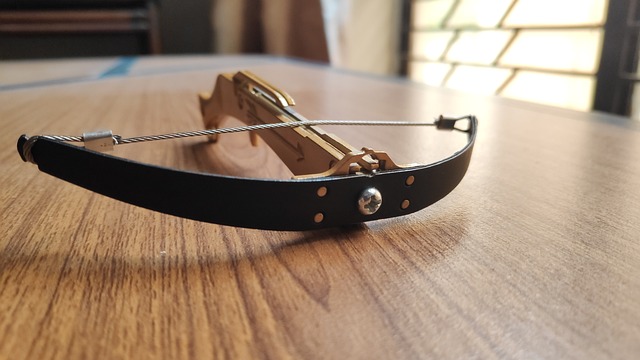
Why Do Crossbow Bolts and Rifle Bullets Follow Different Flight Paths?
Gravity pulls every projectile toward the Earth the instant it leaves your barrel or rail, though speed dictates how steeply that arc bends. A modern crossbow fires a 400-grain arrow between 380 and 440 feet per second, while a big game rifle launches a bullet at more than 2,700 feet per second. Because your arrow spends nearly seven times longer in the air over the same distance, it requires a much higher launch angle to strike your target.
How Do Wind Drift and Kinetic Energy Change at 50, 100, and 300 Yards?
Crosswinds push lightweight, broad-surfaced arrows off course far more aggressively than compact rifle bullets. At 50 yards, a 10-mile-per-hour breeze nudges a rifle bullet less than half an inch, whereas that same gust can drift a broadhead-tipped bolt by three to four inches. Stretching that shot to 100 yards multiplies wind deflection on an arrow to nearly a foot, making precision placement risky for ethical bowhunting. At 300 yards, a centerfire cartridge still holds predictable wind drift within several inches, while a crossbow bolt loses practical accuracy completely.
Ballistic testing shared by Extreme Outfitters shows that heavier arrows deliver roughly 11.4% more momentum than lighter shafts producing the same 80 foot-pounds of kinetic energy, even when moving 30 feet per second slower. That extra momentum allows a heavy broadhead to penetrate deeply inside 50 yards despite carrying a fraction of a rifle bullet’s raw energy.
Reading Manufacturer Trajectory Tables for Medium and Large Game
Manufacturer ballistics charts translate complex aerodynamic formulas into simple holdover numbers you can use in the field. When you study a 308 Ballistics chart to compare drop rates at 100, 200, and 300-yard intervals, you can see how a flat-shooting cartridge minimizes vertical aiming adjustments across open timber lanes. Crossbow trajectory tables display much steeper drop numbers, often showing 20 to 30 inches of vertical fall between 40 and 60 yards.
Bullet Trajectory and Game Size for Ethical Hunting
Reference tables published by Ammo.com illustrate that a flat flight curve shows that a standard 150-grain bullet zeroed at 100 yards drops less than 8 inches by the time it reaches 250 yards. Medium game like whitetail deer offers a compact vital zone roughly 8 to 10 inches tall, leaving very little margin for range estimation errors.
How Do Barrel Length and Projectile Weight Affect Brush Performance?
Dense eastern hardwoods and tangled western brush punish careless shot selection regardless of your weapon choice. Twigs, pine needles, and hidden saplings can destabilize both bullets and arrows before they reach your target.
Shorter rifle barrels between 18 and 20 inches maneuver easily inside cramped tree stands and thick brush blinds without snagging on branches. Trimming two to four inches off a standard 22-inch barrel sacrifices roughly 50 to 100 feet per second of muzzle velocity, which slightly lowers your trajectory at 300 yards. Inside typical 100-yard woodland ranges, that minor speed loss barely affects accuracy while giving you faster handling when game appears suddenly.
What Drives Reliable Expansion and Penetration on Impact?
Reaching the target means little unless your projectile creates a decisive wound channel once it strikes hide and muscle. Bullets and broadheads achieve terminal damage through completely different mechanical processes.
Rifle bullets rely on hydraulic shock and controlled mushrooming to transfer energy into surrounding tissue, while broadheads slice cleanly through blood vessels and organs. Choosing the right head style keeps your arrow driving straight through heavy shoulder anatomy.
Compact fixed-blade broadheads require zero kinetic energy to open upon impact, preserving every ounce of forward momentum for deep penetration. You should favor fixed blades when hunting large-bodied game like elk or black bear, where thick bone can stop weaker designs.
How Can You Set Ethical Range Limits Before Opening Day?
True marksmanship in the woods comes down to knowing your personal cutoff distance before an animal steps into view. Trajectory tables give you baseline expectations, yet real-world factors like steep tree-stand angles, low light, and elevated heart rates shrink your effective range. You can lock in reliable ethical boundaries by following four practical steps during preseason practice:
- Verify your optic zero: Confirm your rifle scope or crossbow reticle hits dead center at your primary zero distance using your exact hunting load.
- Practice from field positions: Shoot off shooting sticks, kneeling rests, and elevated platforms rather than relying solely on padded benchrest groups.
- Test broadhead flight paths: Shoot your actual hunting broadheads at 30, 40, and 50 yards to verify they match your field-point impact.
- Cap your maximum distance: Set a strict yardage limit based on the smallest vital-zone group you can shoot consistently under cold-bore conditions.
Comparing rifle trajectories against crossbow broadhead ballistics shows that neither tool wins in every woodland scenario. Matching your optic zero to your projectile’s specific trajectory path remains the single most important factor for an ethical harvest. When you respect your equipment’s effective range and confirm your holdovers before the season opens, you give yourself the best chance at a clean, humane recovery.
