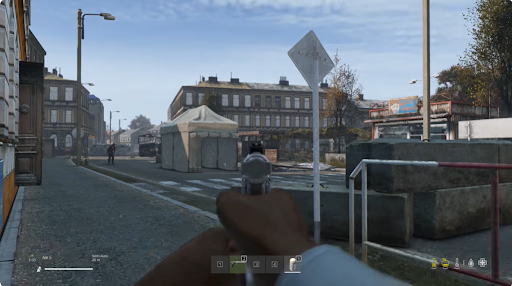
Most players die in DayZ within the first 20 minutes. Not from bullets. From thirst, starvation, or walking confidently in the wrong direction until the coast disappears behind them.
That’s the honest truth about this game. It punishes ignorance brutally and rewards preparation quietly. So before you worry about winning gunfights, there’s a hierarchy of skills you actually need to build.
Why Most Survival Guides Get This Wrong
The common mistake is treating DayZ like a shooter with survival mechanics bolted on. It’s the opposite. Combat is almost the last thing that matters — and even then, the best play is usually to avoid it entirely.
Real survival in DayZ follows a clear order of priority. Get that order wrong and even the best aim won’t save you.
The Survival Skill Hierarchy
1. Food and Water Management
This kills more fresh spawns than anything else. The hunger and thirst meters drain faster than new players expect, especially when running. Knowing which foods restore the most energy per slot of inventory space is genuinely a learnable skill.
Prioritize water sources early — wells scattered through every town are your lifeline. Carry at least one container. Eating raw meat without cooking it opens the door to cholera, salmonella, and a very unpleasant death miles from anywhere useful.
2. Navigation and Map Reading
Chernarus is enormous. Getting lost here isn’t just inconvenient — it’s lethal when your food is running low and you’re heading deeper inland instead of toward the next town.
Learning to orient yourself by church spire design, road sign Cyrillic text, and coastline shape separates players who die confused from players who move with purpose. The map reward loop is real: every hour spent learning the terrain pays dividends across every future session.
Some players accelerate this learning curve with reconnaissance tools. Battlelog DayZ ESP is one example of an advanced awareness tool that experienced players use to sharpen their understanding of positioning and threat recognition — though players should always check their server’s terms before using third-party tools.
3. Temperature and Weather Awareness
Hypothermia is quiet and fast. Rain drops your core temperature without any dramatic warning. By the time the status icons appear, you’re already in trouble.
The skill here is anticipating weather shifts, not reacting to them. Keep a second layer of clothing in your inventory. Seek shelter before storms hit rather than during. Firecraft knowledge — finding the right sticks, rags, and stones — becomes essential once temperatures drop in the later hours of a session.
4. Medical Diagnosis and Treatment
DayZ’s illness system is detailed enough to feel realistic and punishing enough to kill players who treat it casually. Broken bones require splints. Bleeding requires rags or bandages. Infections require tetracycline. Each condition has a cause, a window for treatment, and a consequence for ignoring it.
The intermediate skill that separates decent players from good ones is stockpiling medical supplies before they’re needed. Running to find tetracycline while already infected, hands shaking on screen, is a familiar death spiral for players who don’t prepare.
Intermediate Skills: Where Survivors Start Thriving
5. Loot Prioritization and Inventory Discipline
Inventory management is genuinely strategic. Every slot is a decision. Carrying three backpacks worth of canned food sounds smart until you can’t move quickly and you’re caught in the open.
Good players develop a mental checklist: tools, medical, food/water, weapons. Everything else is situational. Learn which buildings spawn which loot categories and plan your routes accordingly rather than looting randomly and hoping.
6. Stealth and Threat Avoidance
Walking — not running — through populated areas is a habit elite players build early. Sound travels far in this game. Zombies alert nearby players. A door opening at the wrong moment gives your position away entirely.
Crouching through high-risk zones, timing movement to wind cover, and using trees and walls to break line of sight are all learnable mechanics that dramatically extend survival time without firing a single shot.
7. Weapon Handling and Engagement Choice
Here’s the thing about DayZ combat most players learn the hard way: winning a fight isn’t necessarily surviving it. Even a victorious gunfight leaves you exposed — to the noise, to whoever heard the shots, to the risk of being looted while you’re patching wounds.
The real weapon skill in DayZ isn’t accuracy. It’s recognizing when not to engage. Experienced players avoid fights they haven’t already half-won before the first shot. Ambush positioning, cover selection, and disengagement routes are more valuable than raw marksmanship.
Advanced Skills: The Differentiators
8. Social Judgment and Trust Assessment
DayZ’s social layer is where the game becomes genuinely unique. Every interaction with another player carries real risk and real potential reward. Being too trusting gets you shot in the back. Being too hostile closes off trading, teaming, and information sharing that could save your run.
Reading context matters enormously here. A fresh spawn running toward you with empty hands is a different risk calculation than a geared player who has stopped moving and gone quiet 200 meters away. Developing that instinct takes time and deliberate attention.
9. Base and Storage Planning
Bases in DayZ are aspirational for newer players and functional for experienced ones. The skill isn’t just building — it’s location selection, camouflage, and understanding the server’s raid cycles.
Bad base placement (too close to high-traffic loot routes, not enough tree cover) means losing everything. Good placement means a stash that survives for days. This is a long-horizon skill that only pays off once your shorter-term survival is already reliable.
10. Long-Horizon Risk Management
The mindset shift that characterizes truly experienced DayZ players is thinking in sessions rather than moments. What are you building toward? What would losing your current kit actually cost you? Is this server healthy, or is it being dominated by a group that makes progress near-impossible right now?
These meta-decisions — which server to play, when to cut losses, when to take calculated risks — determine long-term outcomes more than any mechanical skill.
Common Death Mistakes (And How to Stop Making Them)
Most deaths in DayZ cluster around a short list of avoidable errors:
- Ignoring thirst in the first 10 minutes of a spawn.
- Eating raw meat without a fire because it was faster.
- Running in a straight line across open ground toward gunshots out of curiosity.
Every one of these has a simple fix. The problem isn’t knowledge — it’s habit. The players who survive consistently aren’t necessarily more skilled. They’ve just internalized better defaults until survival behavior becomes automatic rather than deliberate.
Pro Player Habits Worth Adopting
Watching experienced DayZ players reveals patterns that don’t always show up in written guides. They move slower than you’d expect. They stop and listen constantly. They spend more time planning routes than executing them. They treat their medical kit like the most valuable thing in their inventory — because in practice, it usually is.
They also fail differently. When things go wrong, experienced players cut their losses earlier, reset faster, and carry fewer emotional decisions into the next spawn. That psychological discipline — built from enough painful runs — is arguably the highest-order DayZ skill of all.
Final Thoughts
DayZ rewards patience and punishes impatience in almost every system it has. The survival skills that matter most aren’t flashy — they’re the unglamorous habits of eating before you’re starving, navigating before you’re lost, and choosing not to fight battles that weren’t yours to win.
Build those foundations first. Everything else — the combat skills, the base building, the social meta — gets dramatically easier once your basic survival is no longer in question.