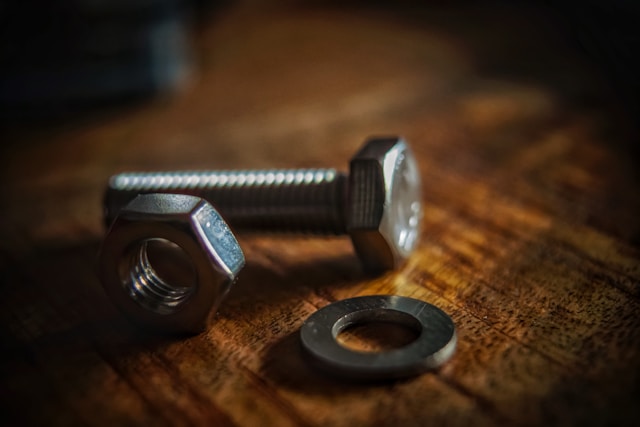
Fender washers rarely draw attention, yet joint behavior can shift because of this small part. Engineers call for them when ordinary flat washers leave too much force concentrated near a hole edge. That wider bearing ring helps protect thin stock, soft substrates, and enlarged openings from local damage. In service, the added surface contact can preserve clamp load, limit pull-through, and keep assemblies steadier during vibration, handling, and repeated loading.
Why Diameter Changes the Joint
Geometry drives the choice. A fender washer pairs a small inner hole with a much larger outer circle, creating broader contact under a fastener head or nut. During planning, teams often compare hole condition, substrate softness, and stock levels before ordering bulk fender washers, because wider coverage can prevent dimpling, reduce edge stress, and support better grip where standard parts lose effectiveness after repeated service cycles.
Better Load Distribution
Force spreads farther with this washer style. A broader bearing face lowers surface pressure at the joint interface, which matters on wood, plastic, and thin sheets. Less concentrated stress means fewer crushed fibers, fewer surface depressions, and less local yielding. As a result, clamp tension tends to stay more consistent. That steadier hold can improve joint stability during vibration, thermal cycling, and repeated use.
Thin Materials Need Support
Thin stock often fails at the hole before a bolt nears its rated capacity. Sheet metal can deform, while plastic may craze, split, or cold-flow under load. A fender washer supports the area around the opening across a larger ring. That extra support helps the substrate carry force with less distortion. Panels, enclosures, covers, and light brackets often benefit from that added bearing width.
Oversized or Worn Holes
Field conditions rarely deliver perfect holes. Corrosion, rough drilling, long-term vibration, or earlier repairs can leave openings larger than intended. In that situation, a standard washer may not bridge the damaged area with enough overlap. Fender washers offer more reach around the perimeter. That extra coverage can steady the connection, reduce pull-through risk, and slow further tearing during maintenance or repair work.
Material and Finish Matter
Size alone does not complete a sound specification. Engineers also match washer material and finish to moisture, chemicals, temperature, and expected service life. Zinc-coated steel often suits indoor assemblies with limited exposure. Hot-dip galvanized options help outdoors where weathering is routine. Stainless steel can work well in wet or corrosive settings. Properly pairing materials limits oxidation, protects bearing surfaces, and reduces replacement frequency.
Thickness Can Change Performance
Washer thickness affects stiffness under clamp load. A very thin piece may cup or dish when tightened against softer stock, which can reduce seating quality. Thicker versions resist bending and provide a firmer bearing surface. That can matter where plastic creeps, wood compresses, or vibration relaxes preload. Engineers balance rigidity with clearance, stack height, and assembly fit before choosing a heavier section.
Common Places They Appear
These washers show up across repair, fabrication, and construction work. Automotive assemblies use them on body panels, trim attachments, and accessory mounts. Builders place them under connectors, strapping, and utility hardware. Maintenance crews rely on them when holes have widened from wear. Wood projects and fence installations also benefit, since softer substrates can compress quickly under narrow bearing points during tightening.
What Engineers Check First
Most specifications begin with a short checklist. The inside diameter must fit the fastener without excess looseness. Outer diameter needs enough span to cover weakened material around the hole. Thickness should resist distortion under expected clamp force. Material and finish must suit the exposure conditions. A fender washer supports the area around the opening across a larger ring. Final review usually considers service life, clearance limits, stack height, and any risk of interference elsewhere in the assembly.
Conclusion
Fender washers solve problems that are easy to miss during early design and costly to fix later. Engineers specify them to spread force, support weaker substrates, bridge enlarged holes, and help maintain clamp stability over time. Sound choices depend on diameter, thickness, material, finish, and service exposure. When those factors line up, this modest part can prevent surface damage, reduce rework, and keep an assembly reliable in daily use.
