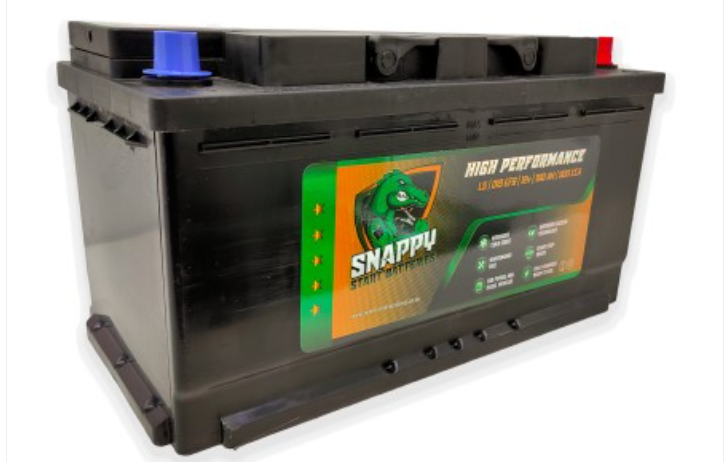
A leisure battery looks simple on paper: pick a capacity, match the size, and you’re done. In practice, it’s one of the most misunderstood purchases in caravanning and van life—mostly because the “right” battery depends less on the label and more on how you actually travel. Are you a weekend hook-up regular, or do you wild camp for days with a fridge, heater fan, and laptops running?
Before you spend a penny, work through the questions below. They’ll help you avoid the classic mistakes: buying too small, choosing the wrong chemistry, or ending up with a battery your charging system can’t properly look after.
1) What does your real-world power use look like?
How many watt-hours do you need per day?
Battery capacity is often sold in amp-hours (Ah), but what you consume is energy (watt-hours, Wh). A quick way to estimate:
- Wh = Watts × Hours
- Ah at 12V ≈ Wh ÷ 12 (roughly; most “12V” systems run 12–14.4V)
Example: a 60W compressor fridge averaging 20W over 24 hours uses about 480Wh/day. Add lighting, water pump, phone charging and you might land around 700–1,000Wh/day, depending on habits and season.
How many days do you want to stay off-grid?
This is the question people skip—and it’s the one that drives everything else. If you want two days without charging, you need roughly double your daily energy plus a buffer for colder weather and battery ageing.
Also ask yourself: will you be running high loads (inverters, coffee machines, hairdryers)? Many of those are better served by gas or mains hook-up; if you must run them, you’ll need a battery bank and cabling designed for high current.
2) Which battery chemistry actually suits your touring style?
Lead-acid (Flooded, AGM, Gel): what are you trading off?
Lead-acid options remain popular because they’re familiar and cheaper upfront. The key trade-off is usable capacity: to get decent life, many lead-acid batteries are happiest if you avoid repeatedly discharging below about 50% state-of-charge.
- Flooded (wet): Often the cheapest, but requires ventilation and can be sensitive to vibration/spillage if not designed for leisure use.
- AGM: Better for higher discharge rates and vibration resistance; common in modern vans.
- Gel: Typically good for deep cycling and slow discharge, but can be fussy about charging voltages.
Lithium (LiFePO₄): do you need the advantages?
LiFePO₄ lithium batteries cost more, but they can offer far more usable capacity (often 80–90% depth of discharge), stable voltage, and strong cycle life—especially attractive if you spend a lot of time off-grid or rely heavily on solar.
However, they’re not a “drop-in upgrade” in every setup. You need to know whether your charger, alternator charging, and battery management system (BMS) strategy are appropriate.
At this stage it can be useful to compare real specifications and form factors across chemistries—particularly if you’re trying to balance runtime, charge speed, and lifespan. A solid reference point is a specialist range of long-lasting batteries for camping and touring vehicles, where you can sanity-check capacities, technologies, and the kind of applications each battery is intended for.
3) Can your charging system properly support the battery you’re considering?
What will charge it: hook-up, solar, alternator—or all three?
A battery is only as good as your ability to recharge it. Ask:
- Mains charger: Does it have the right profile (AGM/Gel/Lithium) and voltage setpoints?
- Solar controller: Is it PWM or MPPT, and can it be configured for your battery type?
- Alternator charging: Is your vehicle a “smart alternator” Euro 5/6? If so, lithium (and even some AGM setups) often need a DC-DC (B2B) charger to charge correctly and safely.
Are you charging to 100% often enough?
Lead-acid batteries dislike living partially charged. If you mostly do short drives and rely on a basic split-charge relay, you may never fully recharge—leading to sulphation and early failure. Lithium is less bothered by partial state-of-charge, but it has its own rules (temperature limits, BMS behaviour, and sometimes specific charger requirements).
4) What does “capacity” mean in practice?
Is the Ah rating at a realistic discharge rate?
Lead-acid ratings are typically quoted at a 20-hour rate. If you discharge faster (say, running an inverter), effective capacity can drop due to the Peukert effect. If your usage includes higher currents, consider:
- Batteries designed for higher discharge rates (often AGM or lithium)
- Larger capacity to reduce strain
- Proper cable sizing to reduce voltage drop
How much capacity is actually usable?
A 100Ah lead-acid battery and a 100Ah LiFePO₄ battery do not deliver the same practical runtime. If you plan to protect lead-acid by using only half the capacity, your “usable” is closer to 50Ah. That’s not a problem—unless you bought 100Ah expecting 100Ah.
5) Will it physically fit, and is it safe in your installation?
Have you checked dimensions, weight, and terminals?
Measure the battery box, note height restrictions, and check terminal orientation so your cables reach without strain. Weight matters too: lithium is lighter; large lead-acid batteries can be surprisingly heavy and may affect payload.
Does it need ventilation?
Flooded lead-acid can vent gas during charging; it must be installed in a ventilated compartment with suitable precautions. AGM and gel are typically sealed (VRLA) but still benefit from sensible installation and fusing.
6) What lifespan should you expect—and what will actually shorten it?
Cycle life, warranty, and support: what’s realistic?
Don’t judge value purely on purchase price. Ask:
- What is the cycle life at a stated depth of discharge?
- What’s the warranty, and what voids it (wrong charger profile, over-discharge, no ventilation)?
- Is there clear documentation for charging voltages and maximum currents?
Poor charging is the silent killer. So is leaving a lead-acid battery discharged over winter, or mixing old and new batteries in the same bank.
A quick checklist to take to the counter (or keep open while shopping)
- What’s my daily Wh use, and how many off-grid days do I want?
- What chemistry fits my charging setup today (and can I upgrade charging if needed)?
- What is the usable capacity, not just the headline Ah?
- Will it fit my battery box, and do I have correct fusing and cable sizing?
- What’s the cycle life/warranty, and what charging profile does it require?
The bottom line
The best leisure battery isn’t the biggest or the most expensive—it’s the one that matches your touring habits and your charging reality. Do the quick energy audit, choose a chemistry that fits your lifestyle, and make sure your chargers can look after it. Get those pieces right, and your battery becomes a quiet, reliable part of the trip rather than the reason it gets cut short.
