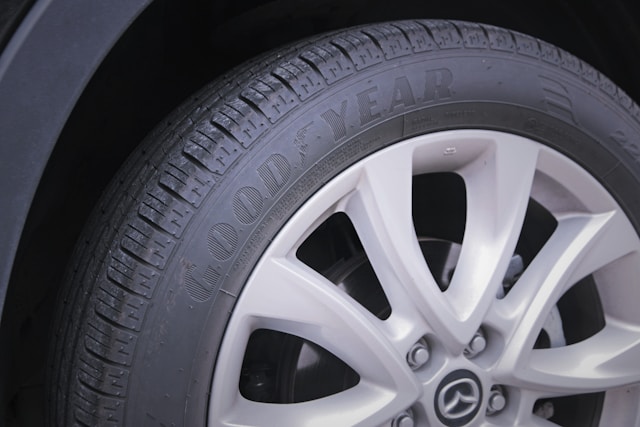
Most of us think that more is better. More coffee helps you wake up, more savings mean more security, and more air in your tires must mean better gas mileage, right? While it is true that properly inflated tires help your car run efficiently, there is a dangerous tipping point where “full” becomes “overinflated.” Driving on tires inflated beyond the manufacturer’s recommendations is not just a minor maintenance error; it is a significant safety hazard that can lead to blowouts or loss of control. If you ever find yourself in a wreck because of a tire failure, seeking legal guidance through every step of your accident claim can help you navigate the aftermath, but the best approach is to avoid the risk entirely by understanding the physics of your wheels.
The Myth of the Max PSI
If you look at the sidewall of your tire, you will see a number followed by PSI (pounds per square inch). A common mistake is assuming this is the goal. In reality, that number is the absolute maximum pressure the tire can hold before it is at risk of structural failure. It is not the recommended pressure for your specific vehicle.
To find the right number, check the sticker inside the driver’s-side door jamb or your owner’s manual. When you exceed this recommended level, the tire changes shape. Instead of sitting flat against the pavement, the tire bulges in the center. This creates a rounded profile that reduces the amount of rubber actually in contact with the road. Less contact means less traction, which is exactly what you do not want when you are trying to brake suddenly or take a sharp turn.
A Bumpy Ride and Suspension Stress
Overinflated tires are incredibly stiff. When a tire has the right amount of air, it acts as a secondary shock absorber, soaking up small pebbles and dips in the asphalt. When you overfill them, they become as hard as bowling balls.
You will feel every single crack in the road. This makes for an uncomfortable ride for you and your passengers, but the damage goes deeper than just a shaky steering wheel. That extra vibration and impact energy are transferred directly into your vehicle’s suspension system. Over time, this can wear out your struts, shocks, and ball joints much more quickly than usual. You might save a few pennies on gas by reducing rolling resistance, but you will end up spending hundreds or thousands more at the mechanic to fix a suspension that has been beaten to death by rock-hard tires.
The Danger of the Sudden Blowout
The most terrifying risk of overinflation is a high-speed blowout. Think of a tire like a balloon. When a balloon is filled to its limit, it only takes a tiny prick to make it explode. An overinflated tire is under immense internal tension. If you hit a pothole, a curb, or a piece of debris on the highway, the tire cannot flex to absorb the impact. Instead, the internal pressure causes the casing to snap.
When a tire blows out at highway speeds, the car often pulls violently to one side. If it is a rear tire, the car can fishtail, leading to a total loss of control. This is how minor road hazards turn into multi-car pileups. Heat also plays a factor here. As you drive, friction naturally heats the air inside your tires, which further raises the pressure. If you started out overfilled, that midday heat might push the pressure into the “danger zone” without you even touching an air hose.
Uneven Wear and Wasted Money
Aside from the safety risks, overinflating your tires is just bad for your wallet. Because the tire bulges in the middle, the tread center wears down much faster than the shoulders. Usually, tires are designed to wear evenly across the entire surface so they last for fifty thousand miles or more.
When you overinflate, you might find that the center of your tread is bald while the edges still look brand new. Unfortunately, you cannot just keep driving on them. Once that center strip is gone, the tire is unsafe and illegal to use. You will find yourself buying a whole new set of tires twice as often as you should, completely negating any tiny fuel savings you hoped to achieve.
Check Your Pressure Often
The best way to stay safe is to buy a simple tire pressure gauge and keep it in your glove box. Do not rely solely on your eyes. A tire can be overinflated by ten pounds and still look relatively normal to the naked eye. Check the pressure when the tires are “cold,” meaning the car has been sitting for at least a few hours. This gives you the most accurate reading. If you notice the pressure is too high, simply press the small valve in the center of the stem to let some air out until you hit that “sweet spot” listed on your door frame.
Final Word
Staying on top of your tire maintenance is one of the easiest ways to keep your car under control and your family safe. Accidents happen in a split second, and having the right grip on the road can be the difference between a close call and a trip to the hospital. If you do end up in a situation where a mechanical failure or another driver causes a crash, remember that getting legal guidance through every step of your accident claim is the best way to ensure your rights are protected while you focus on your recovery.