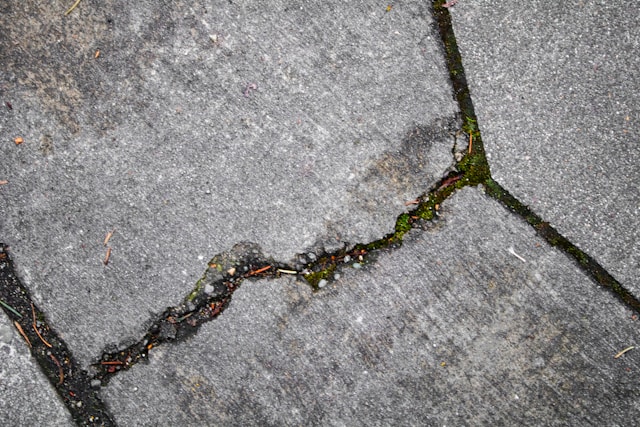
Concrete is one of the most durable building materials around, but it’s not immune to problems. Concrete slabs can rise and crack due to various environmental influences (water intrusion, shifting soil, freeze-thaw cycles, and tree roots), and this can lead to costly problems if ignored. Any sidewalk, driveway, patio, or foundation made of concrete is at risk, but there are ways to prevent and even fix damaged concrete.
Here’s what you need to know about what causes concrete damage and how to fix it before it becomes a nightmare renovation.
1. Soil expansion and contraction is the enemy
Shifting soil is the most common reason concrete slabs start moving. When soil absorbs moisture, it expands, and when it dries, it shrinks. This expansion and contraction will push concrete upward and leave voids under slabs that cause it to shift. Soils that absorb a lot of water, like clay, can shift even more dramatically.
With any type of soil, improper compaction prior to construction can cause concrete to settle over time and become uneven and crack. That’s why soil stabilization and professional slab leveling are critical, especially when you’re building a concrete foundation for your home.
2. Freeze-thaw cycles are ruthless
In cold climates, lifted concrete is often caused by repeated freeze-thaw cycles. When water-soaked soil freezes, it expands. When the temperature drops, the frozen water forms ice lenses that push the soil upward, lifting the concrete as well. When this cycle repeats over time, it can cause extensive damage.
While you may not be able to avoid this completely in certain climates, efficient drainage can mitigate the potential for damage. Properly grading the surrounding area around structures with concrete can help. The grading should slope away from the concrete to keep water draining away from the concrete slabs.
A critical factor in preventing damage is keeping gutters and downspouts clean and functional. When gutters fail, water accumulates around the concrete foundation, where it will eventually cause damage.
3. Tree roots create extreme pressure
You’ve probably seen sections of sidewalk that have been dramatically uplifted by a tree. It’s an unfortunate reality since tree roots grow laterally as the tree matures, and any concrete slabs above the roots will get hit with serious pressure.
Growing tree roots also create uneven moisture under concrete slabs that can dry out some areas while leaving others saturated. This causes concrete slabs to shift.
Generally speaking, arborists recommend keeping at least eight feet of space around a tree to accommodate its roots and trunk. However, installing root barriers and choosing the right tree species can also help prevent damage.
4. Soil erosion and voids cause lift
When the soil beneath concrete slabs becomes unstable or washes away from heavy rain, the result is empty space. Without stable, uniform support, concrete can shift or rise unevenly. Proper drainage systems can prevent this from happening. However, you also need to be aware of underground plumbing leaks that can erode the soil under driveways and home foundations. You might not even know an underground leak exists.
5. Improper installation can make concrete vulnerable
Sometimes the way a slab was installed can cause it to lift. When contractors take shortcuts or concrete is installed as a DIY project, it can lead to slab movement later on if key steps are skipped. For example, concrete requires a stable layer of compacted aggregate, and if this layer is too thin, the soil will shift easily and cause cracking or lifting.
Professional concrete installers should use expansion joints to allow the concrete to expand and contract without cracking. This is the best way to protect against damage caused by temperature changes.
6. Repairing lifted concrete isn’t hard
If you notice concrete lifting or cracking, you have several options. Most situations won’t require a complete replacement.
Mudjacking works by drilling small holes in the concrete and injecting a mixture that fills the voids and lifts the concrete back into a level position. It’s common for sidewalks and driveways, and can be completed in a day.
Polyurethane foam injection is similar but uses expanding foam to fill the voids. It’s more precise than mudjacking and takes less time to cure.
Concrete stability can be restored
You can fix most cracked and lifted concrete without a full replacement, but it’s important to address the root cause to avoid recurring problems.
Now that you know more about why concrete lifts and what you can do about it, you can extend the lifespan of your concrete slabs and reduce the long-term risk of damage.