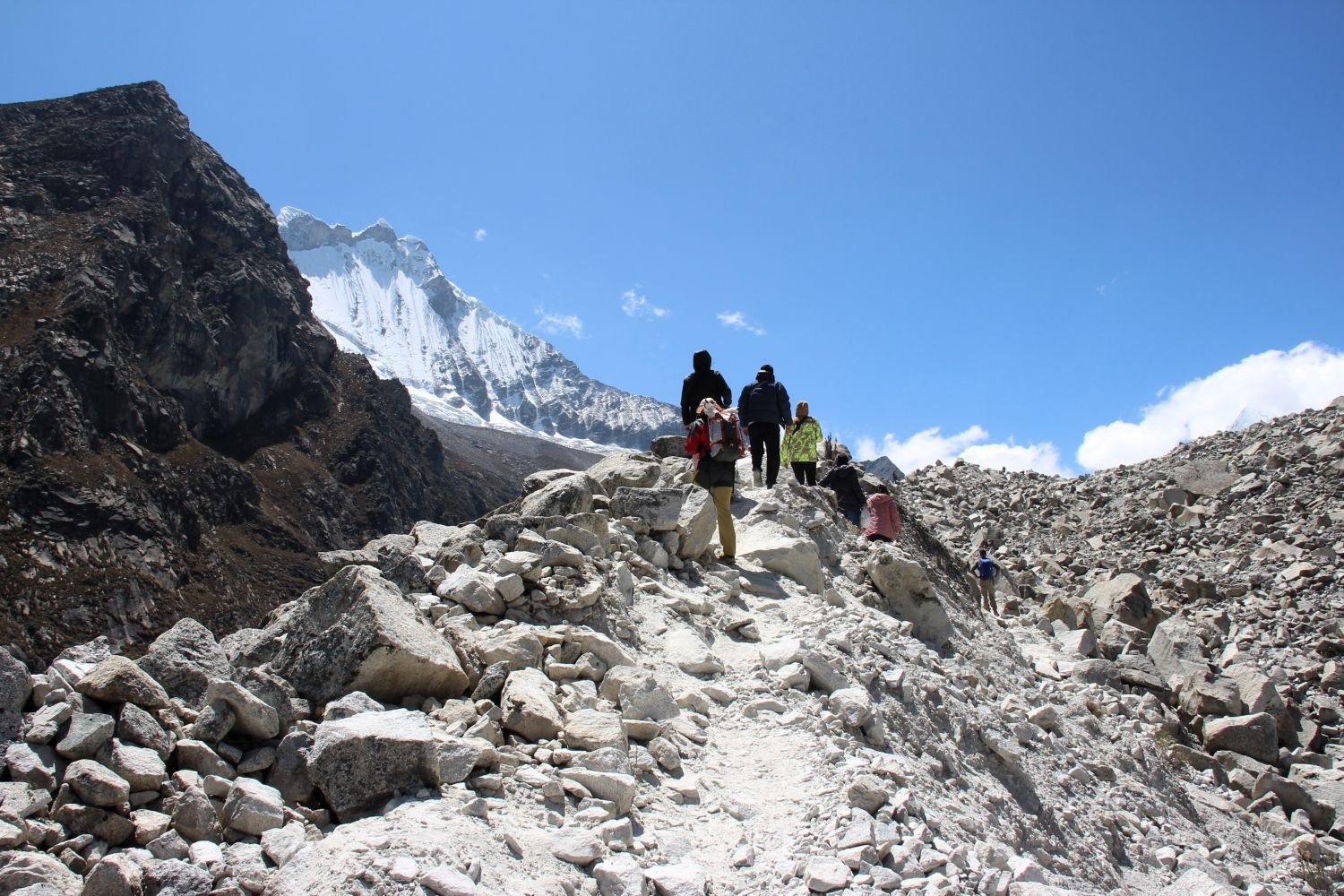
Trekking in Huascarán National Park is a direct encounter with the majesty of the Andes.
In the heart of the Cordillera Blanca, in Peru’s Áncash region, Huascarán National Park protects some of the most breathtaking high-mountain landscapes in the world. Towering glaciers, turquoise lagoons, and extraordinary biodiversity define this territory, which was declared a UNESCO Natural World Heritage Site in 1985. It is the perfect destination for travelers seeking an authentic, challenging, and deeply inspiring experience.
From the very first step, the scenery captivates. As the trail climbs higher, the glaciers grow ever more imposing, and the crisp mountain air signals entry into one of Peru’s purest and most extreme environments.
The backdrop could not be more spectacular: the glaciers of Huascarán National Park stretch across vast expanses, offering views that feel almost otherworldly. Sunlight reflecting off the ice creates shimmering hues that contrast with the deep blue sky, while in certain sections, small streams fed by glacial melt cross the trail—gentle reminders that this ecosystem is as fragile as it is constantly evolving.
For many trekkers, the first glimpse of the snow-covered peaks of Huandoy and Chopicalqui is a moment that stays etched in memory forever.
Flora and fauna in Huascarán National Park
The appeal of Huascarán National Park goes far beyond its landscapes. It is also a vital sanctuary for Andean wildlife and some of the region’s most iconic plant life. Along the trail, it is common to spot the graceful vicuña, one of Peru’s most treasured animals, prized for its exceptionally fine fiber. Its light steps and curious gaze blend seamlessly with the quiet of the mountains. Higher up, in rocky terrain, you may encounter the taruca—an Andean deer that moves among shrubs and stands as one of the region’s greatest wildlife treasures.
In the park’s clear skies, the undisputed star is the Andean condor. Watching it glide above snow-capped peaks is a near-mystical experience; its outstretched wings seem to ride the wind with effortless, almost supernatural grace. Other notable species include the torrent duck, puna partridge, speckled teal, Andean duck, as well as the silvery grebe and the Andean gull.
Trekking here also offers unforgettable encounters with smaller birds, such as the giant hummingbird—the largest in the world—and the Andean hillstar, whose feathers shimmer like precious stones in the sunlight. These moments reward those who move patiently along the trails of Huascarán National Park, where every step upward reveals a new layer of life and color.
Huascarán National Park is home to a wide range of microclimates that create a true mosaic of landscapes and vegetation types. More than 845 plant species have been identified within its boundaries, including the iconic Puya Raimondi, as well as forests of queñual and alder trees.
What are the best routes in Huascarán National Park?
High-Andean lagoons are a must-see along any route. Places like Llanganuco Lake or Lake 69 have become famous for the striking color of their waters, fed directly by glacial melt. These natural oases, framed by towering granite walls, invite rest, quiet reflection, and photography. Pausing to breathe deeply, feel the cold mountain wind, and watch the peaks mirror themselves in the water is a deeply restorative experience.
For those seeking a greater challenge, the ascent to the Alpamayo Base Camp unveils one of the most iconic landscapes in world mountaineering.
Multi-day trekking enthusiasts will find the Santa Cruz Circuit to be the park’s signature route. This 3- to 4-day journey crosses high mountain passes, deep valleys, and ever-changing scenery that keeps the experience fresh at every turn.
Trekking in Huascarán National Park is a safe and rewarding adventure when done with professional guides, who understand the routes, local wildlife, and the region’s rapidly changing weather conditions. These trails are designed for all levels, from demanding multi-day hikes to short routes ideal for first-time visitors to the Cordillera Blanca.
For travelers looking to connect with nature in its purest form, Huascarán National Park delivers a journey that blends adrenaline, beauty, and close encounters with Andean wildlife. Every step between glaciers, every sighting of animals in the wild, and every glance toward the timeless mountains becomes an open invitation to return, explore further, and fall in love with the Peruvian Andes.