For some travelers, a week by the sea sounds perfect. For others, day three arrives, and the question is already forming: what else is there to do?
The Yucatan Peninsula works surprisingly well for the second group. Yes, the region includes famous Caribbean resorts, but a trip here can just as easily revolve around Maya cities, cenotes, colonial streets, local food, and road-trip days that feel completely different from one another.
That range is what makes the peninsula more intriguing than its resort image suggests.
Inland Yucatan Changes the Whole Feel of the Trip
Move away from the main beach zones, and the rhythm changes quickly. Mérida and Valladolid make useful bases for walking, eating, and day trips, while Chichén Itzá and Uxmal add historical depth.
Then there are the cenotes. Much of Yucatán sits on limestone, and rainwater moves through the rock below ground. Where cave roofs collapse, they can expose the groundwater beneath. Some cenotes are open to the sky; others feel more like caves with a pool hidden inside.
After a hot morning walking around ruins, descending into cooler water feels like a change of climate.
A useful rule is to pair activities rather than attractions. A day that includes one major site and one swim or one town is often more enjoyable than attempting to visit four “must-sees” before sunset.
History Here Is Not Something You See From a Bus Window
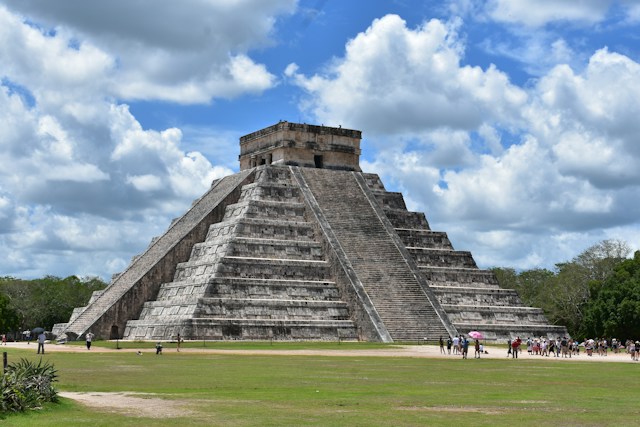
Chichén Itzá is the obvious name, with landmarks including El Castillo, the Great Ball Court and El Caracol. It can also be busy, so an early start makes practical sense.
Uxmal feels different. Its monumental architecture belongs to the Puuc region, and the decorative stonework rewards slower looking. Even travelers who normally say they are “not really into ruins” may find two contrasting sites more interesting than spending an entire day at one.
A Good Yucatan Itinerary Leaves Room for Ordinary Moments
The best part of a road trip is often what happens between headline attractions. You stop for lunch because you are hungry, not because a restaurant was on a spreadsheet. You walk into a market for ten minutes and stay for forty.
That is why an overplanned Yucatan itinerary can work against the destination. Driving times may look manageable on a map, but parking, entrance queues, and meals all add up.
Here is what some of the most useful road-trip connections look like in practice:
| Driving leg | Approx. distance | Approx. driving time | What it means for your itinerary |
|---|---|---|---|
| Mérida → Uxmal | 80 km (50 mi) | 1 hr 15 min | Easy as a day trip, with room for another nearby stop |
| Mérida → Chichén Itzá | 125 km (78 mi) | 1 hr 35 min | Possible in a day, but an early departure helps |
| Mérida → Valladolid | 163 km (101 mi) | 2 hrs | Better treated as a change of base than a quick excursion |
| Valladolid → Chichén Itzá | 45 km (28 mi) | 40–50 min | One of the easiest combinations for a sightseeing day |
| Uxmal → Chichén Itzá | 160 km (99 mi) | 2 hrs 45 min | Long enough that extra stops can make the day tiring |
Driving times are only a planning guide and can change with traffic, roadworks, and your exact starting point. Still, the distances show why staying in two bases often makes more sense than repeatedly returning to the same hotel.
Food Gives You Another Reason to Leave the Hotel
If beach holidays bore you because every day happens inside the same resort bubble, food is another argument for moving around. Yucatecan cooking has its own identity, with dishes such as cochinita pibil, sopa de lima, papadzules, and panuchos appearing across restaurants and markets.
You do not need to turn the trip into a food tour. A regional lunch or market breakfast already changes the day, and a longer meal during the hottest part of the afternoon can be smarter than squeezing in another exposed site.
The Beach Can Be a Side Trip, Not the Purpose
You can spend several days inland and still finish with one afternoon by the Caribbean. Or stay near the coast and use two or three days for ruins, towns, and cenotes.
When people search for things to do in Yucatan, they often find long lists. The more useful question is which activities create the kind of days you actually enjoy. If you like walking, history, spontaneous stops, and changing scenery, build around those.
Changing hotels every night sounds efficient until you are packing again at 7 a.m. Two or three bases are usually easier to manage.
A Little Planning Keeps the Trip Enjoyable
Start early on archaeological days, carry water, use sun protection, and check current opening hours before setting out. Cenotes are not all managed in the same way, so facilities and swimming rules can differ.
Leave part of the day unscheduled. That gives you room for a longer lunch, an unexpected stop, or simply a break when the heat catches up with you.
Build the journey around how you like to spend a day, not around the image on a resort brochure. In Yucatán, that small shift can turn a destination you assumed was “mostly beaches” into one of the most varied trips in Mexico.
