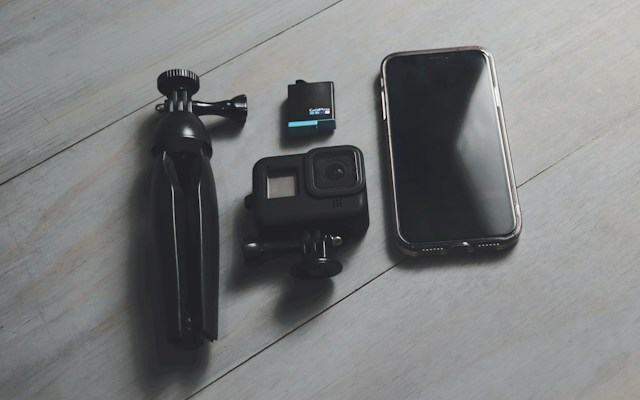
When accident reconstructionists worked a nighttime left-turn-across-path crash between a Suzuki GSX-R750 and a Chevy Malibu, the single most useful piece of evidence was a GoPro from the rider’s helmet. Officers used the camera’s 30-frame-per-second playback and the dashed lane lines on the roadway to compute an average speed of roughly 52.5 mph over a 317-foot run-up to impact. One camera, one rider, one clean number.
Now picture six of them. Six helmets, six phones, a few Bluetooth intercoms chattering in the background, maybe a chase vehicle with a windshield cam. A crash happens mid-pack, and within an hour the group is sitting on a dozen video files and a shared certainty about what went wrong.
That certainty is usually the problem, and it is the reason an experienced personal injury firm will tell riders to stop talking and start preserving before the files move anywhere.
More Cameras Does Not Equal a Clearer Story
The intuition is that six recordings must beat one. In practice, more angles usually mean more disputes about what the frame shows. A rider two bikes back captures a lane change that looks aggressive from behind and routine from the side. Defense counsel does not have to disprove your version of events if your own group’s footage disagrees with itself.
The useful question is not how many files exist. It’s which files, from which mount points, show the seconds that matter, and whether any of them were running in a mode that logs the telemetry a reconstructionist can use later.
The Timestamps Won’t Line Up
Camera clocks drift. Phones re-sync to cell towers at different moments. One rider set his GoPro’s time last spring and never touched it; another’s phone rolled off daylight saving a week ago. Four seconds of clock drift across six devices is enough to make the same brake light look like it came on before and after the collision, depending on which file you believe.
Reconstruction depends on a shared timeline. Investigators and lawyers will try to anchor the footage to something fixed — a traffic signal cycle, a passing vehicle visible in multiple angles, a horn — and work outward. Riders who hand over files that have been re-exported, trimmed in a phone app, or dropped into a social post have usually stripped the embedded metadata that would make that anchoring possible.
The Group Chat Afterward Doesn’t Help Everyone Remember
The ride ends, the ambulance leaves, and the group pulls into a parking lot to compare notes. This feels responsible, but it is not neutral. Research on what psychologists call memory conformity suggests that witnesses who talk before giving independent statements drift toward a shared account, and that account is often wrong in the same places.
A recent explainer on eyewitness memory walks through how confident, consistent group recollections can diverge sharply from what actually happened — the confidence comes from the conversation, not the event. If five friends tell the responding officer the same story, and the GoPro telemetry later contradicts a piece of it, the whole group’s credibility takes the hit, including the one person who had it right.
Don’t Upload Everything to the Cloud Right Away
The instinct to back up and share is reasonable; the execution usually isn’t. Dropping clips into a group thread, a cloud album, or a social post almost always triggers a re-encode. The new file has a new creation date, a new hash, and no original EXIF. If the footage later becomes evidence, the opposing side gets to argue that what you handed over is a copy of a copy.
A few steps keep the files useful:
- Leave the SD cards alone. Pull them, label them with the rider’s name and the camera’s mount position, and store them.
- Make bit-for-bit copies. If you need to review footage, copy the whole card to a drive before opening anything, and work from the copy.
- Skip the editing apps. Trimming, stabilizing, or adding music strips the data a reconstructionist needs.
- Preserve the intercom logs. Cardo, Sena, and similar apps store call and connection records. Export them before the next ride overwrites the buffer.
Authentication Is Not a Formality
Riders tend to assume video speaks for itself. But before a GoPro clip gets in front of a jury, someone has to swear to where it came from, how it was stored, and that it hasn’t been altered. If the chain of custody includes six phones, a group chat, and a cloud folder with edit permissions, that part gets a lot harder.
Metadata inconsistencies between devices, format conversions, and EXIF changes are routine authentication fights, and there are entire guides for lawyers on how to handle them. The riders who come out ahead treat the cards like physical evidence from the moment the bikes stop.
What a Group Should Actually Do in the First Hour
- Separate before you talk. Each rider writes down what they saw, from their own vantage point, before anyone compares.
- Pull the cards. Power down each camera, remove the SD card, and bag it with the rider’s name and mount position.
- Note the clock drift. Photograph each device’s current time against a phone showing network time.
- Hold off on the group chat. The thread is discoverable, and anything written in it will be read back later.
- Call counsel before you post. The first 24 hours set what you can and can’t prove for the next two years.
Six cameras can capture a crash six different ways, but the value of that footage depends on what happens to it in the minutes and hours afterward. Preserve the original files, preserve each rider’s independent memory, and let the evidence establish the shared timeline instead of trying to build one in the parking lot.
