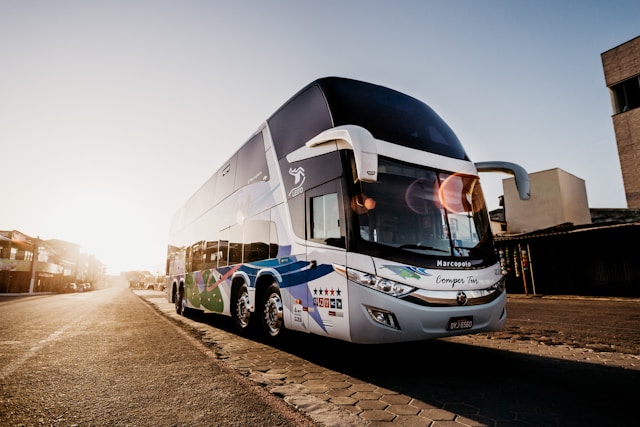
City bus crashes rarely come from one single mistake. In many cases, the street itself sets the stage. Tight lanes, impatient drivers, unpredictable pedestrians, and stop-and-go congestion can turn an ordinary route into a high-pressure obstacle course. When traffic conditions pile up in a busy downtown core, the risk of bus accidents rises because there is less space, less time, and far more chances for a split-second decision to go wrong.
Congestion Creates More Conflict Points And Less Reaction Time
Heavy city traffic increases the risk because it multiplies the number of “conflict points” a bus must navigate every minute. Cars squeeze into gaps, motorcycles thread between lanes, cyclists appear along the curb, and pedestrians cross late when the signal is already counting down. A bus is large, slow to stop, and limited in how quickly it can change direction, so the margin for error shrinks fast in gridlock.
Constant stop-and-go movement also makes following distances inconsistent. A driver may leave space, then watch it get instantly filled by a rushing car. When that happens repeatedly, sudden braking becomes more common, and rear-end collisions or passenger falls inside the bus become more likely. Congestion also raises stress for everyone on the road, and stressed drivers tend to make riskier choices, like cutting in sharply or braking without warning.
Intersections, Turns, And Blind Spots Become Harder To Manage
Urban routes are packed with intersections, turns, and merging lanes, and each one requires precise timing. Buses often need to swing wide to turn, especially around tight corners bordered by parked cars or curbs. In a calm setting, other road users may give space. In a crowded city, many drivers try to slip past anyway, sometimes landing directly in a blind spot.
Intersections add another layer of danger because multiple movements happen at once: left turns, right turns, crosswalk traffic, and vehicles rushing to “beat the light.” A bus driver may check mirrors, scan a crosswalk, and judge oncoming traffic in seconds, but one unexpected move, such as a pedestrian stepping off the curb or a scooter darting forward, can trigger a crash or a sudden stop that injures riders.
Lane Changes, Bus Stops, And Aggressive Driving Raise The Odds
City traffic encourages frequent lane changes, and buses are forced to participate even when it is not ideal. They must pull in and out of stops, merge around double-parked vehicles, and reposition for upcoming turns. Every merge is a negotiation, and not everyone negotiates politely. Aggressive driving, including tailgating, speeding between red lights, and refusing to yield, increases the likelihood of sideswipes and near-misses.
Bus stops are another pressure point. Cars may try to pass on the right, pedestrians may step into the lane to board, and cyclists may ride along the curb at the exact moment the bus pulls in. Add rain, glare, or nighttime visibility, and a routine stop can quickly become dangerous for both passengers and nearby road users.
Road Design Problems And Distractions Compound The Risk
Some city streets are simply not designed with buses in mind. Narrow lanes, faded markings, confusing detours, poorly timed signals, and construction zones create constant surprises. When buses must navigate potholes, uneven pavement, or temporary barriers, drivers may need to brake or swerve more often, which can lead to collisions or onboard injuries.
Distractions also play a role in dense traffic environments, not only from phones, but from the sheer amount of visual information: signs, lights, pedestrians, delivery trucks, and sudden lane closures. Even a careful driver can be overwhelmed when the street demands attention in ten directions at once. If an accident happens and someone is hurt, a personal injury lawyer can help clarify what factors contributed, including traffic patterns, road conditions, and driver behavior.
Wrappin Up
City traffic conditions increase bus accident risk by squeezing time, space, and attention into a small and chaotic environment. Congestion heightens stress and reduces braking room, intersections and blind spots create constant hazards, aggressive lane changes and bus stop activity raise collision chances, and poor road design plus distractions amplify every mistake.
The more crowded and complicated the streets become, the more important it is for all road users to drive predictably, give buses adequate room, and respect the reality that a large vehicle cannot react like a small car.