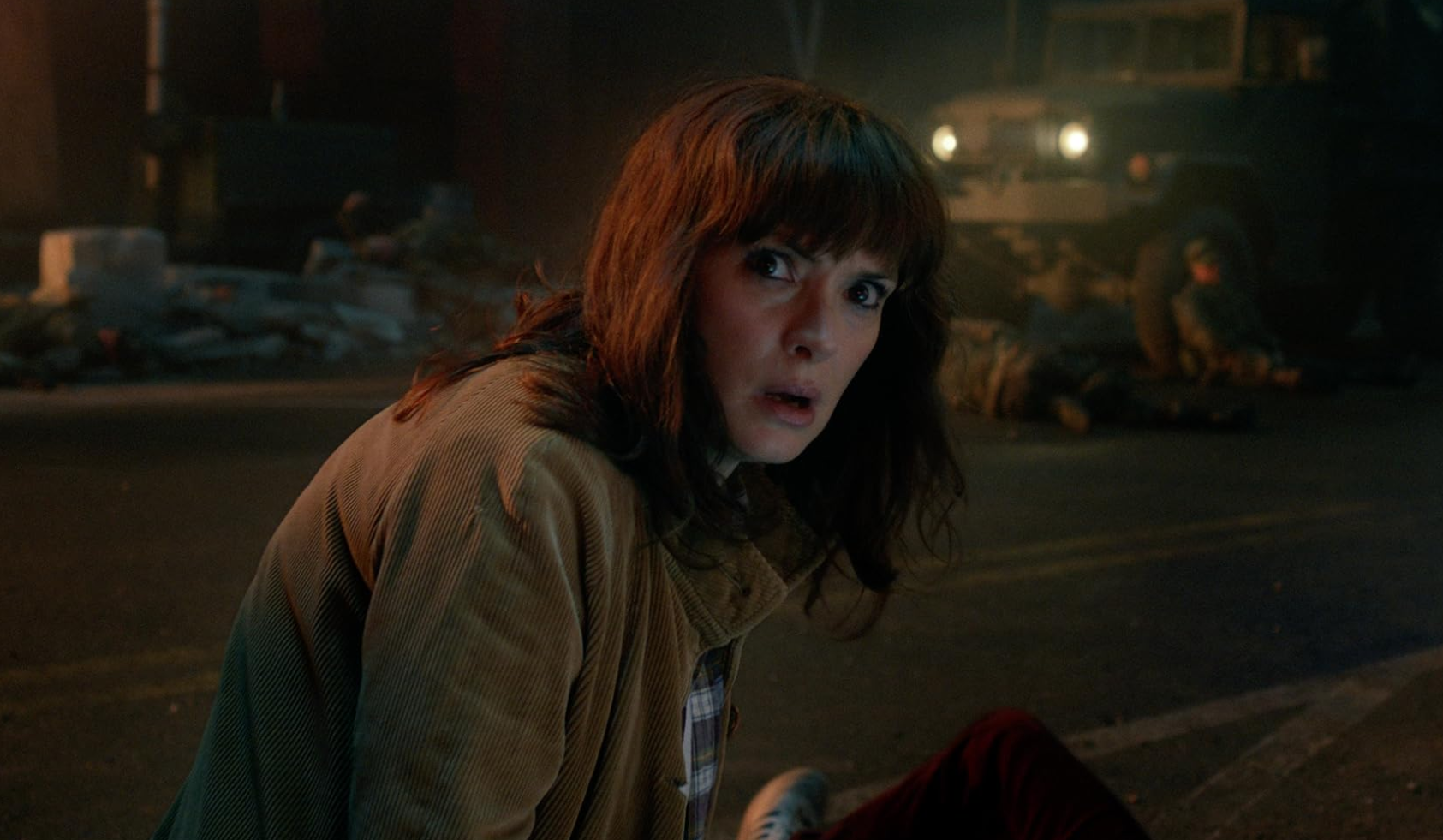
“Stranger Things” was always a pastiche of tropes. It’s always been wrong to dismiss it as nostalgia-porn or waive it off like the only thing it had going for it was its ‘80s setting. Yes, that time period plays a role in the storytelling (especially the Cold War aspects as the series went on), but it was more about various narrative elements that blossomed in the 1980s than it was about New Coke or a Baltimora needle drop. At least, it was that way for most of the run. Starting with the fourth season and bleeding well into the fifth, it became less a testament to those themes and more a victim of modern-day blockbuster filmmaking. Suddenly there was bloat, overexplaining, convoluted storylines, too much CG, and not enough surgical editing. All these things we associate with the worst big titles of the 2020s was now present in 1980s Hawkins. Clearly it was a victim of current storytelling problems.
Or was it? ‘80s comics was led by the work of Chris Claremont, John Byrne, Marv Wolfman, and George Perez who delivered epic tales of all-too human superheroes (even the mutants). But it’s easy to forget just how messy those stories got in “Uncanny X-Men” and “New Teen Titans.” Sure, everyone remembers the Phoenix Saga, but do you recall Dire Wraiths? They took up more issues than the Dark Phoenix in the ‘80s! Jean Grey’s sacrifice was heartbreaking, but Cyclops’ space pirate father is just bizarre. So, while it’s easy to put a lot of the blame on “Stranger Things” various misfires on current filmmaking, it’s not too much of a reach to point out how convoluted storylines got in the geekiest parts of the ‘80s, too.
And there are many misfires with “Stranger Things” season five. The biggest are there’s way too much setup and exposition in the first half of the season (and continues all the way through the finale). The show has been on for four previous seasons (nine years by the time season five started streaming)—that’s the prelude. That’s the setting up of pieces on the board and then you have some new wrinkles that lead to a surprising conclusion. You don’t have to constantly reset the status quo, restate it, and establish rules every episode. Rules they don’t even really follow (for a militarily occupied town, there’s very little military presence outside of a couple of spots). This screenwriting gives off last season of “Lost” where suddenly there was a rush to introduce new mythology that would somehow encapsulate all the strangeness that came before it. That retroactive rush job didn’t work for “Lost,” and it doesn’t work all that well here.
This is also hampered by the fact that two of the show’s stars were very solid child actors but unfortunately have grown up to be incredibly limited adult performers. Millie Bobby Brown and Noah Schnapp’s lack of abilities wouldn’t be a huge hindrance if The Duffer Brothers didn’t constantly try to make them the emotional centers of various scenes. It’s harsh to say it, but they simply are not good in their roles at this stage of their lives, and the show suffers for it immensely. Add into that a poorly assembled secondary threat of the U.S. Army (Linda Hamilton has also done better work) that seems more like an obstacle than an actually compelling antagonist, and a lot went awry in season five of “Stranger Things.”
And yet…
With all that said, there’s still lots of great moments in the season. The rest of the cast is great, and their chemistry continues to carry over even the dull performances of co-stars or the overwritten dialogue of the Duffers. While the coming out scene was awkwardly scripted, it was still a beautiful moment. While the threat of a melting building was established too late, it provided space for a tremendous scene between Natalia Dyer and Charlie Heaton. While it was CGI-laden and not always the most sensical, I still cheered when Mrs. Wheeler kicked ass or the kids united together to finally take on the Mind Flayer. Those moments are built not just on the years that led up to them (properly) but also excelled thanks to the performances and direction. So, there are many bright spots, mostly found in the final three episodes, that make it hard to dismiss.
As a whole, I would say “Stranger Things” was a success. I think the best season was the second (I’m someone that loved the sidequest with the sister—very Chris Claremont!) and the weakest was probably the fifth. But in all five, The Duffers and company found ways to emotionally affect audiences and introduce real sense of action and camaraderie in the face of evil. I’m reminded of David Harbour’s SAG acceptance speech when the cast won that award for the first season. “Stranger Things” really was a show about misfits banding together against impossible forces to save a world—a world that doesn’t particularly like them. And yes, through its five seasons it went to ridiculous places (literally as in USSR of season four), but at its core it remained this powerful tale of the unlikely adventurers never giving up despite everything saying they should. I don’t think it’s a coincidence that it worked so well against the backdrop of the last 10 years. For while season five is wonky, it nevertheless brings home the story of dreamers and other freaks rising to the moment and pushing back against the darkness. And sometimes, that’s all you need.
3 / 5 Stars – Season Five
4 / 5 Stars – Series As A Whole
Created by: Matt Duffer and Ross Duffer
Starring: Winona Ryder, David Harbour, Millie Bobby Brown, Finn Wolfhard, Noah Schnapp, Gaten Matarazzo, Caleb McLaughlin, Natalia Dyer, Charlie Heaton, Joe Keery, Maya Hawke, Sadie Sink, Jamie Campbell Bower, Nell Fisher, Priah Ferguson


