I love the word “façade.” With its dangling cedilla hanging from the c, and just the way it effortlessly rolls off the tongue like so many other French words. It’s such an upgrade from the similar “face” while also denoting something hidden, something behind it. I kept thinking of this word I love while watching director Paul Feig’s “The Housemaid,” as it deals a lot with pleasant exteriors masking some things far more sinister and troubling behind them. Based on the novel by Freida McFadden (adapted into a screenplay by Rebecca Sonnenshine), the film has a twisty plot that is constantly shifting perspectives to reveal new depths so what appears to be the status quo is quickly altered with new context and meaning. Where “The Housemaid” drops the ball is that its own exteriors aren’t as intricate as its interior subject matter, its aesthetics merely pedestrian while its narrative is far more ornate. It’s hard to watch this movie and not think of a better version, one with more style and visual daring to better match the story and characters.
Millie (Sydney Sweeney) is seeking a job as a live-in housemaid for Nina (Amanda Seyfried) and Andrew (Brandon Sklenar) Winchester. The interview went well, but Millie doesn’t think it’s going to work out given all the lies on her resume and she’ll be stuck, still destitute and living out of her car. She’s elated when Nina offers her the position – one of handling the house and errands, but also preparing meals for Nina, Andrew, and their daughter CeCe (Indiana Elle). At first, anyways, Soon it becomes very clear that all is not well in the Winchester household as Nina acts increasingly erratic. It’s not long after that secrets of Nina’s past are revealed, as are some from Millie’s, and it seems like a collision course is set between the two as Andrew tries to play diplomat. Seems that way, at least, but nothing is quite as it appears for any of these characters.
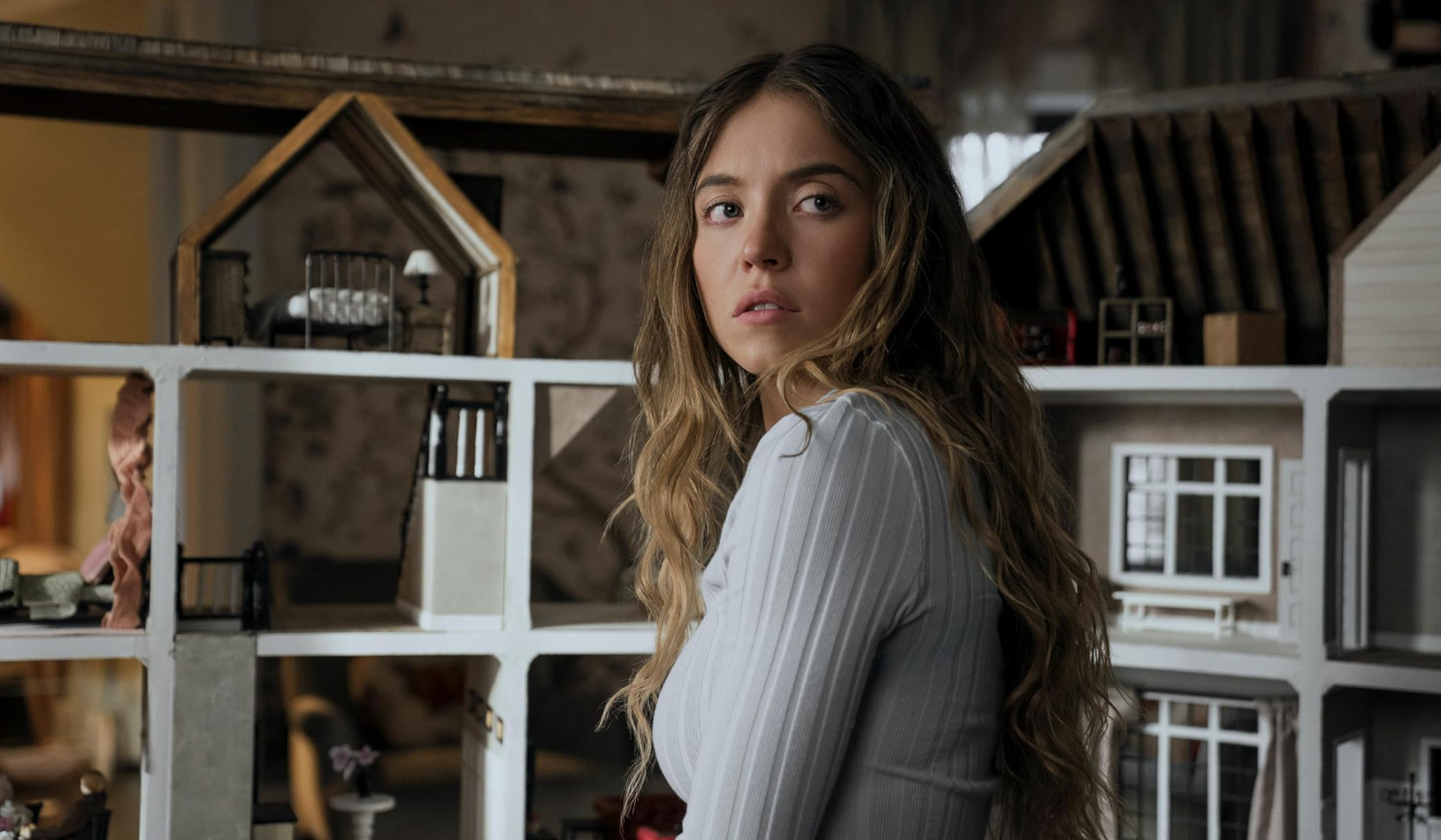
The house should be a character in “The Housemaid.” That may sound daft, but it’s the type of movie where such a distinct location (where the vast majority of scenes take place) should be immediately identifiable and stand out. In fact, it’s remarked upon multiple times how Andrew designed it and how it looks so unique…but it really just looks like any upper-class suburban place. And that’s an indication of the failings of “The Housemaid”; in the hands of a more talented, stylish artist, this would be a lurid classic tale of twists and turns complete with iconic visuals. Feig—who has proven his ability to craft interesting imagery in “A Simple Favor” amongst other titles—instead opts for the most basic of cinematography and production design. “The Housemaid” cries out for cool transitions, and passionate camerawork with stirring staging, stunning wardrobes, and more. But what it gets is a plain jane trip to suburban hell that makes it far less impressive and engaging.
The argument could be made that this lack of visual panache is purposely done to ground the story and play up those mundane façades. If everything looks incredibly normal, then audiences will focus more on the ever-changing sympathies and twists the story takes through its runtime. But that feels like just an excuse to be boring. 2016’s “The Handmaiden,” for example, has an incredibly intricate plot that is constantly turning into different directions and POVs, but also looks gorgeous. Imagining what Park Chan-wook, classic De Palma, Coralie Fargeat, The Wachowski sisters, and more could do with this script is enough to truly frustrate a cinephile. This could be a lurid tale for the ages – one filled with violence, and sex, and reveals, and reversals – that would show up in stills and references for generations alongside classic pulp stories that have been brought to the screen with much greater bravado.
Instead, “The Housemaid” is just okay. The story is interesting and inventive, with some surprising elements that are exhilarating to see revealed. Seyfried is particularly great in her role, playing up her dangerous mania along with a surprisingly sadder side as well. Sweeney seems outmatched but that actually serves her character, someone who finds herself out of her element and at the mercy of elites but has a hidden reserve that may surprises her counterparts (and the audience). There are fun exchanges of catty dialogue, sexy sequences, and some well-staged eruptions of violence that all help propel “The Housemaid” forward as it gains momentum and excitement. But the fact that it’s captured in such a perfunctory way really dims so many of the film’s otherwise bright aspects.
It’s a shame that Feig doesn’t bring visual flair to “The Housemaid.” The director is capable of it but chose to forego that (possibly for thematic purposes) and we are all the lesser for it. In a different world, fans would be churning out GIFs and screenshots and more of the movie to highlight its sensuous imagery and audacious style. The performances would be paired with better framing, the heightened plot complimented with some beautiful set design, and all of it rendered in a way that would resonate beyond just this plainly delivered film. “The Housemaid” is engaging and entertaining…but it could have been amazing.
3 / 5 Stars
Starring: Sydney Sweeney, Amanda Seyfried, Brandon Sklenar, Indiana Elle, Elizabeth Perkins
Directed by: Paul Feig